Showing posts with label social media. Show all posts

Sunday, January 27, 2019

A Service Learning Program Proposal

by johnhain courtesy of pixabay.com
I am enrolled in the EdTechTeam Teacher Leader 2 course. The first unit for this course is service learning. After studying the work of  Cathryn Berger Kaye and engaging in dialogue with other members of the cohort about their schools, I have undertaken writing a high school-based service learning plan. I envision a program for 9th graders that will set the tone for how they approach learning for the rest of their time in high school. In my grand vision all rising 9th graders would participate in a full quarter (if not semester) of “boot camp” for lack of a better term. It could be kicked off during freshmen orientation. The boot camp experience would be a deep dive into design thinking, problem solving, and service. The normal bell schedule and daily routine would not apply to 9th graders during this marking period. The program would provide 9th grade students guidance developing what we know are critical life (not just learning) skills: critical thinking, empathy, collaboration, problem solving, communication, creativity, flexible thinking and comfort with ambiguity. There is also room for computational thinking and entrepreneurship. All of this can lead to global mindfulness and an innovator’s mindset. Emerging from this experience students would be well prepared to engage in two years of problem-based learning curricula and transition into an internship and continual service-oriented senior year.

Imagine if all teachers of 9th graders from all disciplines as well as the guidance counselors and library media faculty participated in design thinking professional learning as well as orientation to service learning. Then they could rotate through the program facilitating the work of the students, lending their expertise and support to projects that align with their areas of interest and skill set. Ultimately this would be an eight week, full day program which would then carry into the advisory groups of the students throughout the duration of the year.

The type of service in which each student engages will be determined by the student. As they undertake an examination of the needs of the school, the community, and the wider world, students will choose the focus of their service and design an approach that marries their skills and resources with the needs of the group they choose to serve. Ultimately, I imagine students would engage in multiple forms of service and will collaborate on combined interests to maximize the services offered and the impact of their work.

Students might address the prevalence of juuling in their school in the interest of promoting community wellness. They might tackle intersectionality which is a particularly potent topic where I live in the wake of a proposal in our state general assembly that a mostly white and affluent district be merged with a neighboring district that has a multi-ethnic population and significant funding challenges in its schools. There are so many possible ways students can work to improve their school, their community, and the wider world and the skills they learn in the process will be essential to the rest of their education and life beyond school.

As part of their experience, students will create a social media campaign through which they can document and publicize their research and service in order to inform the community of their work and recruit participation in order to sustain and even scale up their projects. These networks and means of telling their stories, which can also include student blogs and school newsletters, will allow for ongoing reflection on the work they are doing and the value of service as well as provide a channel of communication which can also facilitate the development of empathy among the various members of the community.

As facilitators of the boot camp, all teachers of 9th grade will be able to integrate the students service learning into the curriculum throughout the year. Advisory and other student groups and clubs will also serve as a means of continuing the reflective dialogue about the importance of service in learning and beyond.

Tuesday, November 6, 2018

Students solving problems of social media, part 2

In case you missed part one of this posting series, in it I described the design thinking process we used to define "social media", identify the pros or benefits of it as well as the cons or detriments. Then each student chose one "pro" to preserve and one "con" to fix when crafting their "How might we..." questions. You can read about the specifics of each step and see pictures in the part one post.

Here is how this process is unfolding.

Once the students each had a "How might we..." (HMW) question they were ready for the next design thinking step: ideation. On two occasions earlier this year, we used Crazy 8's, and for this experience I wanted to expose them to a new brainstorming technique. I chose a round robin approach because that process would continue emulating social media posting, which is the focus of our problem solving.

We started out with blank paper covering the table. Each student wrote their HMW question across the bottom of the paper at their spot at the table. Then, they began to draw what a solution to their problem might look like. They could use a combination of words and graphics to convey their vision. We spent 15 minutes drawing ideas, and the room was silent almost the whole time. At one point, one student said, "I'm not sure..." and then trailed off. I responded by saying: "Try drawing what it would like if your problem didn't exist."

After 15 minutes we rotated seats. I asked the students to review the idea captured on the paper in front of them and then add to it. I said they could add clarifying questions about elements they were not sure if they understood, they could add ideas in the form or words and more drawings. The only thing they couldn't do was cross anything off the page. Once an idea was written or drawn, it was there to stay -- just like social media. The only thing I did allow students to cross out, was something they had written, there was not erasing other people's thoughts. And, we were all working in pen or marker so even cross outs left a trail. In this way, our pen and paper process emulated social media posting. We stayed at our new seats for several minutes to give each student ample time to reflect and contribute before rotating again.

With six students at a table, the mid-point of the exercise was after the third rotation. At this point we stopped to reflect on the process. I directed the students to talk about what they were doing and how that compared with their typical role or conduct in class. I asked them not to talk about the ideas on the paper, just to talk about what they were doing, how they felt or what they thought about the process. I was struck when my student who is most anxious about contributing to class discussions said that she had time to thoroughly consider her ideas and write them carefully so that they would make sense. She remarked that when she tries to talk in class she gets wrapped up in her thoughts and can't articulate her ideas clearly. But with this process she had a lot to say. How cool?! And a happy by-product that I didn't anticipate.

We continued rotating seats and adding ideas until everyone returned to their original spot. We ended class with students sharing with the group how their idea was evolving and collecting for themselves follow up questions they want to ask the group during the next class.

And the focus of the next class is: prototyping!

Once again, stay tuned for more about how my students are using design thinking to solve the problems of social media!

Link to Part Three!


Saturday, November 3, 2018

To Story Is Human

Note: This post was generously cross-posted by EducateLLC.

I would like to tell you a story. It is about my son when he was in fourth grade.

By the time Zach reached fourth grade he said he hated school. This wasn’t entirely true. All evidence suggested he loved gym, recess, lunch in the cafeteria, and the bus ride to and from school. Unfortunately, by fourth grade he didn’t like reading or writing or much of the academic side of school. These likes and dislikes were well-known by his teacher by the point in the year that the first round of report cards were issued and it was time to launch the annual penny book project. For this project Zach had to find a one penny minted during each year of his life, he had to attach that penny to a piece of paper and on that paper write a story from that year of his life. Then, he was to assemble all the pages into his penny book. You might be able to imagine my parental response to learning about this project! How was I going to get him to do this?

Thankfully, Zach’s teacher was as interested in Zach’s happiness and success as I was. I presented her with an idea: Zach would create a different project, he would meet all of her curricular objectives, we would document all of his work so she could see that everything was authentically his, and he would submit it on time. She agreed.

So Zach set out to collect pennies. He reminisced with all of our photo albums to find the perfect story from each year of his life. He digitized on our printer/scanner all of the photos that were important to each story. He took a video camera and interviewed anyone he could find about their memories of those stories. Then, he collected all of his ideas into a storyboard which he used as a guide to create a digital movie of his life. He showed each penny, he narrated the stories in his voice, he chose the soundtrack, and made a final screen of rolling credits. I don’t think he was ever been so proud of any school project. This was in 2007.

When Zach brought his project CD and his box of pictures, pennies, and storyboards to school, the teacher played his video for the class. Then she called me to say she cried. “He had this in him all this time,” she said. His teacher asked if I would come to the school and show her how to make a movie like that. I politely declined, and suggested that Zach would be happy to show her anytime!

Telling our stories is so important. It is a very human thing to do. Cave drawings are the stories of our very early ancestors. The printing press enabled the widespread distribution of stories. Some cultures have traditions of oral telling of stories passed through generations. The scientific development of photography in the mid-1800s with the daguerreotype resulted in widespread making of tin types so people could leave them as calling cards when they visited one another’s homes. Business cards, school pictures, home movies. The list goes on of all the myriad ways we make ourselves known and build connections with other people, document our existence, tell our story. Technology may change, but our need to know and understand one another, build common ground, and work out differences is eternal. And we do that through our stories.

Social media platforms know how much this matters to us. They enable us to combine our pictures and words into the stories of our important moments. We and our students have been using social media to tell our stories ever since we subscribed to those platforms. The actual story format started in 2013 with SnapChat stories and other services have followed suit including Instagram in 2016 and Facebook in 2017. Those aren’t the only ways we tell stories; Skype has highlights and YouTube allows us to create reels.

When it comes to engaging our students in sharing their stories, the possible formats are endless! Within the Google Apps realm students can write and illustrate interactive stories in Slides, Docs, Sites, Draw, Maps or Tour Creator. They can record themselves and publish to YouTube where channels and playlists host videos students make and others they curate.

Beyond gSuite, students can tell video stories in Flipgrid, they can annotate visual stories in ThingLink, and they can publish ongoing stories as podcasts. And when we consider the possibilities for synchronous and asynchronous interaction, students can share stories in Twitter chats, in private Facebook groups, and in Google+ communities. Building an audience for their stories by publishing them not only validates the importance of their experiences, it fosters interaction with new people which expands their horizons and their learning community and allows for authentic, embedded lessons in discourse and digital interactions.

Tuesday, October 30, 2018

Solving the Problems of Social Media, Part 1

This week we began a new unit in the Digital Literacy class that I am teaching; I called the unit, "Social: the new media". I curated a playlist of videos on YouTube for creating flipped lessons and giving students opportunities to explore sub-topics of interest to them. I consulted the lessons and ideas published by the Stanford History Education Group (SHEG), Google's Applied Digital Skills, and the Sift from the News Literacy Project. Clearly I had lots of stuff I could ask the students to do, but I was owning it and that didn't feel right.

So I put everything to the side, cleared off my desk, and got blank paper and some sharpies. I started to think about problems with social media. Not because I want to make a case for my students that social media is rotting their brains and they need to do something healthier with their time. Frankly, that would be quite hypocritical of me! Instead, we are setting out to solve the problems. To the right is my lesson plan for the first two days.

Here is how it worked in practice.

First, I covered tables with paper, piled a bunch of sharpies and markers in the middle, and let each student claim a spot as s/he arrived. In the center of each table I had written this:


The lesson on the first day unfolded in four phases.

Phase 1: Defining
Round 1: write your definition of social media on the table where you are sitting.
Round 2: rotate clockwise, read what you find, and add to or amend it. Do not cross out or cover anything you find.

Phase 2: Pros
Round 3: rotate again, read what you find, make a list of the "pros" of social media. What are the benefits?
Round 4a: rotate, and, once again, read what you find and add to the list without covering or removing anything you find already there.

Phase 3: Cons
Round 4b: now start a list of "cons" when you think about social media. What are the drawbacks or detriments?
Round 5: rotate one last time, and now you are back where you started. Read what you find. Add anything you want. And then, circle the pro that matters most to you and the con that most bothers you.

Before moving to the next phase we discussed the process we had just used and how it mimics social media posting and commenting. We considered why I asked them to only respond to previous comments and be sure to not write over or cross any out. We also talked about how or whether they filtered what they wrote because it was on the table where I could see it and it felt "permanent" doing it with Sharpies. A little nod to digital citizenship.

Phase 4: How Might We
Round 6: Write your "how might we" question. How might we preserve (your pro) while fixing (your con)?

Here is what a table looked like at the end of the lesson:


And here are some of their How Might We questions:

  • HMW preserve a way to connect and share ideas while fixing a false sense of success?
  • HMW preserve the connection between others while fixing the distribution of hate?
  • HMW preserve the freedom of being able to share what we want and being able to connect with others while fixing the consumption of time it takes?
  • HMW preserve social media's ability to connect us with varied communities while fixing the way it encourages dangerous comparisons?
  • HMW preserve connecting with friends while fixing the spreading of hate and false information?
Day 2 was all about growing empathy with social media users other than ourselves. The students started this process by thinking about someone they know who has experienced the social media problem they are addressing. They listed all they know about that person: what they do, what they say about themselves and about social media, etc. Then, they wrote three open-ended questions they could ask that person to learn more about that person's experiences with social media. And then they conducted interviews. Some students called people on the phone and discussed their topic that way while taking notes on what their subject said. Others went to other parts of the school to find people. Others sent emails.

At the end of the class, they all came back to our classroom to review their interview notes. They highlighted anything that their subject(s) said that was interesting, enlightening or new information that they didn't already know about the person.

Later this week, they will refine their HMW questions to more accurately reflect the needs of the people they interviewed and we will begin the ideation process. Stay tuned to learn about the brainstorming techniques we use and the ideas that the students will begin to prototype.

Remember all of the resources that I collected in preparation for teaching this unit? They now will become relevant as the students begin to research possible solutions to the problem they are tackling and they will have a vested interest in reading, watching, and unpacking the resources I curated for them. This learning process, over which the students have agency, is much more meaningful and empowering than any teacher-directed instruction I could have created. I can't wait to see what they create!

Here is Part 2: Ideation

Monday, April 2, 2018

The Social Media Infused Classroom: Mediated Messages 2.0

I have written a few times about my experiences as a member of the Certified Google Innovator #SWE17 cohort and the ongoing learning as part of #GoogleEI . The focus of my application to the Innovator Academy (and the ongoing thread of my work with students and my colleagues) is the development of media literacy. The importance of media literacy can not be understated. Nor can the value of social media as a teaching, learning, and publishing tool.

In the latest iteration of my Innovator project, Mediated Messages, I have added a section on lesson ideas and launched a Facebook group for building a collaborative community dedicated to expanding our capacities for media literacy instruction. Social media is a multi-faceted education tool; it can be used for personalizing instruction, as a research resource, to foster global engagement, and to provide authentic digital citizenship practice. Here are examples of it being used or practiced in each of these contexts.

For Personalizing
In this previous blog post I wrote about my collaboration with an English teacher creating The Selfie Project. Ultimately, as a corollary to their study of Transcendentalism, the students used the makerspace to create 3D representations of self (we called it, "Yourself, in tangible relief"). The project started with an examination of all of the ways a student's identity can be explored, including through playlists, social media, school pictures, the contents of their bedrooms, and their school data. The lesson steps are here and this is a gallery of pictures of the students and their work

For Research
Understanding "Journalistic Truth" and the impact of digital media on our sources of information is essential to student development of savvy research skills. The journalistic truth slides outline a two-period lesson I co-delivered with an English teacher to the students in the non-fiction writing class.

Finding experts and research or non-profit foundations on social media is another excellent way for students to collect valuable insight and potential interview subjects to inform their inquiry.

For Global Engagement
An educator with a global PLN has the resources to connect students with adults and other students around the world for a sharing of culture and point-of-view. Exposure and interaction builds empathy and collaboration. My favorite experience using social media as a teaching tool happened when I was a social studies teacher working with a group of American Studies students. We were studying the cold war and I happened to have a Tweep who is an educator living in eastern Germany. She joined my class for a twitter chat about life in eastern Germany behind the wall and after the wall came down. We were scheduled to chat for 30 minutes and ended up chatting for the entirety of a 70 minute block period. During that time a few of her teacher colleagues joined the conversation as did her daughter who was a student at university. Now my students had both adults and a peer with whom to share perspectives. Several of my students and Ines' daughter began following each other on Instagram, too. The conversation began as a discussion of cold war life and evolved into a discussion of how do we each learn about the other. It was a rich exchange that far exceeded my expectations when Ines and I were planning it!

Teachers at my school haven't yet warmed to Twitter but they are enjoying Flipgrid in closed, classroom-based exercises. Expanding their grids to include participation outside of our school will be a first step building PLNs.

As anyone in the Google Innovator program knows, my cohort, my coach, and my mentor are unparalleled in their support of my work and the counsel they provide. And it's all happening via social media and Google Hangouts.

For Digital Citizenship Practice
I have an on-going collaboration with the teacher of our school's Digital Literacy course. Together we have launched a class Twitter account that the students use to post reflections on lessons and units and provide insights and guidance about good habits of online conduct. To launch this account we had students use Canva to design channel art. We loaded each of their submissions into a Google Form which we pushed to them in Classroom. Students then voted for their favorite design and that was uploaded to Twitter. Then I taught a brief lesson on Hashtags & the Anatomy of a Tweet. The conclusion of the lesson was each student drafting what the first class tweet should be. Again, we shared the submissions with the class and they chose which would be used as our introduction to the Twitterverse.

Social Media Think Tank for your students is another way to engage them with social media in the context of your course material; here is an elevator pitch you can use with your students.


And that's not all!
My interest in educational use of social media preceded my acceptance into the Innovator Program and new opportunities to continue my learning in this realm have emerged because of the connections I made there. Here are some of the other irons I have in the fire at the moment:

At ISTE18 I will be co-presenting on using social media in the college search and application processes. From building a brand to researching schools to writing the college essay, there are so many ways students can powerfully use social media.

Public libraries in my area are interested in hosting seminars about media savvy and I have a couple happening this month.

My book is about to be released! I co-authored News Literacy: the keys to combating fake news with my friend and fellow librarian, Michelle Luhtala. It will hit the stands in May 2018! I am very excited about the companion video workshops that are being released in conjunction with the book. Those lessons include outreach into social media communities so that the learning is ongoing.


Sunday, April 1, 2018

If it isn't personalized, can it really be inquiry?

When given the opportunity to write a research paper about any topic that interests them, many students become overwhelmed by the task of deciding what to research. Many librarians recommendation is to survey topic collections in the databases and pick something interesting. I say this because a member of our state's librarian listserv asked for suggestions about getting started with topic selection and I was the only participant who didn't recommend the databases. Maybe this is because I am new to librarianship. But I just don't start there. Ever.

When out to dinner with a group of people from librarian world while attending the AASL conference back in November, an interesting question arose that none of us could answer. Several people grabbed their phones to start searching for the information and I offhandedly commented that I was fairly certain none of them were searching their databases. And they weren't.

Databases are fabulous resources. Access to them is not universal or forever. And, until a student knows how to manipulate a search, databases are horribly impersonal and sterile. Students should learn how useful databases are and how to use them well, but unless they are a future librarian, starting there is a big turnoff. If we want students to enthusiastically -- or at least willingly -- engage in the hard work that is research then we need to meet them where they are, embrace it, and use it to hook them. This isn't pandering; it's personalizing.

Start with their playlists, their favorite books, their video streams, their social media feeds. Look for the threads that show possible lines of inquiry. Whom do they follow who isn't an actual acquaintance? Why do they follow? What about that person, group, or organization intrigues them? Choose a topic or idea. It will be broad. Too big for a typical research project, and now we start to narrow it.


To give them practice I choose a current event with long roots for them to work as a class to narrow. Recently, I used "protest movements" and I explain how recent protests have captured my attention and in some I have been a participant so I am using my experiences as an opportunity to select a topic. The class divides into four groups. I then do a Google image search for protest movements and ask them to just look at the images and, by themselves, consider what looks familiar and what is new. While they are looking and thinking, I give each group a large piece of chart paper or a white board. Across the top I have written one of these categories: events and issues, time periods and dates, people and organizations, places and landmarks. I give them 90 seconds to work as a group and list as much as they can about protest movements that fits the category they have been assigned. At the end of 90 minutes, they put their markers down and rotate. Same group, new topic, 90 seconds on the clock, GO! We do this until each group works on brainstorming for each category.

When they finish -- which means they return to their original table -- they compile all of the ideas on the chart paper into a Google Doc that looks like this:
Then I highlight looking for threads. In this example the thread I was using was "students" and this large topic allows for many different threads. In fact, in one class they realized that even if every student in the class started with protest movements as their original topic, once they narrowed their focus, they would still be researching 25 discrete topics. I wouldn't suggest dictating to a class that they all research about protest movements because it removes student agency from the process and therefore undermines personalization. That being said, I do work with teachers who do assign the umbrella topic.

The thread provides the first narrowing of the topic. From "protest movements" we derived a more focused topic: How schools and colleges responded to student activism in the 1960s. Then we examined that topic for points that were still general and the students were able to ask questions such as: Activism about what? And, which schools? So our final topic became:


This exercise was just the model. We completed the exercise as a class in about 25 minutes. That meant they had another 25 minutes to try this protocol with their proposed topics so I provided them an organizer in a Google Doc pushed to them through Classroom.

As they worked, the classroom teacher and I circulated helping them expand their thinking and answering questions about the images that emerged from their Google search. Ten minutes into working, I stopped the class to share my observations. I told them that I noticed some students were plowing through lists and generating lots of ideas to consider. Other students were stuck, their organizers mostly blank. I hypothesized for them that the reason some were blank was because they weren't really interested in the topic, and that if that was the case, this research paper was going to be a painful experience. Some of them snickered and nodded in ascent. I told them now was the time to choose something that really mattered and that if they really didn't have any ideas they should take out their phones, get on Instagram, and raise their hand so one of us could chat with them. And they got back to work.

By the end of class, each student had chosen a topic -- each student had agency over that topic and how it was focused. Real inquiry can now happen because they will be exploring something that matters to them, not something a teacher told them matters. This week, among other things, we will work on generating a research question, another element of personalizing the research process, so that each student is seeking the insight s/he craves about his/her unique topic. They do this by listing everything they think they know about their topic and then turn each of those statements into a question. For example:

What I already think I know:
Phrased as a question:
Upheaval on college campuses during Vietnam War
How did universities respond to student activism?
Do universities tolerate student activism?
Did students organize across universities?
Did employers hold students’ activism against them?

It is key that they be coached to ask authentic questions, not questions that lead to a predetermined answer. In other words, stay open to ideas and avoid seeking bias confirmation. As they turn what they think they know into questions, they begin to realize two things: 1) they may not be sure about everything they think (or not know as much as they think they do), and 2) some of their questions will be easily answered (closed) and others are open to interpretation (open). They can then group closed questions with the open questions they help to answer. They are starting to organize their thinking and plot a line of inquiry. Of course they will revise and update this plan as they go, but with a starting point and a plan they can be more purposeful in their searching.

Finally, we get to the databases! We will also learn how to search Google like a database by using advanced search and how to search social media for field experts.

Thanks for reading. If you have other strategies and tips for personalizing inquiry I would love to hear them!

Friday, March 16, 2018

An off-Broadway lesson on personalization: the selfie project

Back in December I saw “In and Of Itself,” the one-man show by Derek Delgaudio off-Broadway in New York City. I was utterly awed by this show, both the concept and the performance. Perhaps you have seen, on social media, images of Neil Patrick Harris, the show’s producer, holding a small card that proclaims “I AM an individual.” The whole show, all of the stories and the magic, evolve from and respond to the individuals in the audience. All audience members, as they enter the theater, select a card that they decide defines them. My chosen card said “I AM an innovator” because I had recently returned from the Google Innovator Academy in Stockholm, Sweden. At the end of the show, Delgaudio jokes that some people may have snarkily chosen their card seeking to be something funny, like a ninja, while others may have chosen a card that is something they aspire to be, and still others a card that proclaims who or what they are. Regardless, he reminds us, each member of the audience selected a card for personal reasons that the rest of us would never know.

You might be wondering what does this has to do with libraries or school or teaching. My answer is: Everything. If Delgaudio can personalize a 75-minute long show in response to an audience of 200 or so strangers (give or take for the smattering of celebrities who attend the shows), then we can personalize our instruction for the 25 or so students in our classes whom we see daily and know by name. Whose data we review and analyze. Who spend more waking hours of their day in shared space with us than with anyone else close to them in their lives. At the end of the day, we want them to have conversations like this:

LEE: Hi!!! It’s been awhile! How are you? I just wanted to text you to see your thoughts on Derek Delgaudio’s show! As you may remember I’m a magician, and Derek is actually a friend of mine, he was my counselor for years at camp. I’m seeing his show again next week.

ME: Get out of town! I thought the show was amazing. We talked about it all night and for days
afterwards. It still comes up periodically in conversation and certainly resonates with me with things I read as you can see from my posts on Facebook. What a privilege for you to study with him! And of course I remember you are a magician, I could never forget!

LEE: Haha I’m so happy to hear you love it, I think it was a phenomenal show magic wise and theater wise. The ending was beyond beautiful, and I think the last moment of the show is jaw dropping. It’s so cool how the show extends out of itself too, with the brick leaving the theater, and having someone come to the next show, that’s just genius

ME: Yes, on all counts! I just love that I am constantly reminded in my daily interactions from having seen that show that everybody I encounter is more and different than what I think they are upon first glance or even if I have known them for a very long time.

LEE: I love that you got that out of the show, magicians just can’t normally give an audience a good message besides “haha I fooled you”....

LEE: What “I am” card did you choose?

ME: I chose innovator. I don't know if you know, but I was accepted into the Google innovator Academy and went to Stockholm to study this past October. And then when he asked people to stand if what they chose is how they see themselves, I stayed in my seat because I decided that being a Google innovator is a label someone else has given me and I am still aspiring to deserve it…. When you see him can you tell him that an aspiring innovator who is also a high school librarian in Connecticut is still thinking about the messages of his show and will for quite some time into the future.

LEE: Of course I heard! Congratulations! And I’m rly interested in that way of thinking. Of course I’ll tell him for you! ...

This is the transcript of a Facebook messenger chat I had with a former student who saw my social media post about seeing the show. Parts of the chat have been removed to prevent show spoilers, but the spirit of the chat is in tact. I have included this chat, with Lee’s permission, because it shows a teacher-student relationship outside of the classroom and because the interaction was made possible by a social media connection. Lee and I first shared a classroom, classmates, and a curriculum. Now we safely and respectfully share a digital space.

This dialogue with Lee helped me articulate for myself the ironically simple lessons I have taken from Delgaudio’s performance and translate those lessons into teaching and librarianship. What follows is an exploration of a way I am collaborating with a teacher of AP English to apply these lessons to the students’ examination of Transcendentalism. First, the lessons (in no particular order):

Lesson 1: Be authentic. Share stories from your life so that your collaborators (students and teachers) understand your backstory. It is impossible to develop empathy otherwise.

Lesson 2: Acknowledge, then disregard, your preconceptions. We all have them and they limit how well we can understand each other.

Lesson 3: Magic inspires awe. Embrace wonderment. It leads to questioning, theorizing, teamwork, and problem solving. It may not lead to “right” answers, and it doesn’t have to.

Lesson 4: Timing is everything! Capitalize on the moment. Know where the students are and meet them there. Don’t wait for them to come to you.

My co-teacher in this exercise is a highly-regarded veteran educator. Her background in the pop culture publishing world helps her bring an edge to her curriculum application that students appreciate. We have only known each other for six months. While she has invited me to teach lessons in one of her classes, we have just begun to transition from me as guest teacher to us as co-teachers. And this is the first time she has opened her high stakes, AP class to working with me. Transcendentalism is perfect content fodder for applying the four lessons.

The students will read and unpack Emerson and Thoreau’s consideration of self. The students are discussing the musings of two men who, more than 150 years ago, dedicated themselves to understanding the nature of intellect, the connections between humans, and what it means to be self-actualized. Needless to say, this is a stretch for 17 year olds. Thoreau, at least, disconnected himself from organized society to get in touch with himself and the natural world. Disconnect is not something digital teens do often or willingly. But portrayals of self are something they do constantly. So selfies and snapchats are our authentic route by which to bring transcendental thinking to the digital teen.

With fidelity to the TPACK model of educator collaboration, the English teacher will guide the students through a viewing of Into the Wild and an application of Emerson and Thoreau to Chris McCandless. They will also be reading the article from the May 21, 2009 New York Times called “The Case for Working with Your Hands”. As colleague says, working with your hands is “a very Thoreauvian thing to do.” This means the students are coming to work in the makerspace!

We are starting with a consideration of the art of portraiture and these guiding questions:
How do artists and photographers capture the essence of a person?
Has the artist captured not the person but whom we want the person to be?
Or, do we not matter and the artist portrays the subject as the artist wants the subject to be seen?
Students will apply these questions to various portraits and self-portraits including Arnold Newman’s iconic photograph of Alfried Krupp, Annie Liebowitz photographs of Patti Smith and both a Frida Kahlo self-portrait and a still from the movie starring Selma Hayek in which the painting of that self-portrait is portrayed. Artists have been making selfies for centuries; these are the ones we selected because the content of each will likely resonate with our students (Lessons 1 and 4).

Now we will turn the students to examine different conscious and unconscious ways they are portrayed and in the interest of time, the introspection and artifact collection that must occur in preparation for the final project will be facilitated through a series of shortscreen casts, thus flipping the classroom and allowing for private reflection on the nature of self. For each type of portrayal we will both share a piece of our own story (Lesson 1). We will start with student data. Between Naviance, PowerSchool, and College Board, there is lots of data that is compiled to tell a story of each of these students -- both as individuals and as part of an aggregate. They will collate their data and decide, “If all we know about you is your data… who are you?” (Lesson 2)

Next we will turn to their playlists and ask them to consider what do their video and music preferences say about them? “If all we know about you is your playlists… who are you?” Related to their playlists is the constructed reality of their social media self-portraits. After they review what they think are their important posts on a variety of platforms, they will decide: “When you post on social media, what narrative of your life or yourself are you creating?” (Lesson 4)

Next, we will turn to the tangible. Students will inventory their bedrooms making a list of what they find there and respond to this question: “If all we know about you is the contents of this space… who lives there?” Finally, we want them to collect their school pictures, arrange them from youngest to oldest, and when they see them in sequence consider what story they tell (Lesson 1).

Have you noticed an absence of Lesson 3? Here it comes!

Now the students are ready to get Thoreauvian. It is time for them to unpack themselves. Using all the information about themselves that they have curated: their data, their playlists, their social media, the artifacts in their rooms, and their school pictures, they are going to answer these questions:

What do you:
Hope? Fear? Believe? Desire? Wonder? Deny? Aspire? Want? Plan? Anticipate? Avoid? Regret?


Each response must include evidence from their curated information and artifacts.

And now it is time to create! The class will visit the makerspace to create a selfie, a tangible representation of all that it means to be them. They can use light and sound, texture, mixed media, positive and negative space, and all the possibilities of their imagination (Lesson 3). They might compose and shoot their own photographic portrait, or create a mixed media representation of themselves, or build a sculpture, or something else we can’t anticipate. In other words, your self, in tangible relief. It will be magical and they will appreciate that there is so much more to them and each other than can possibly fit on one card.

Sunday, February 11, 2018

Media Literacy, Emotional Intelligence, and a Slumber Party

At the Google Innovator Academy we were presented with a rocket ship metaphor: as the academy was ending we each had a rocket ship on a launch pad. How would we fuel it? When might it take off? Into what uncharted areas would we navigate and explore? For a little while now, I have been feeling as though my rocket ship is fueled up and ready for ignition but ground control is waiting on favorable weather conditions to authorize a launch. And the weather has been inclement for way too long. Houston, we have a problem.

To address the problem I have had irons in many fires lately. Or, perhaps a better (still fire-related) metaphor is that I have been striking lots of matches to see which burst into flame.
  • I offered an "Appy Hour" at my school for teachers to learn about my Innovator project and join if they were interested. One colleague met with me and invited me to pitch my "social media think tanks" to his Humanities class: 55 ninth graders. 
  • My town library is preparing a series of adult seminars on media literacy and a colleague referred them to me as a presenter. I have been working with one of the other participants to prepare a workshop for this event.
  • As a result of that public library's interest in the topic of media literacy with adults as the audience, I have contacted other are libraries and will be meeting more adult programming coordinators in discuss workshops for the adults raising digitally engaged teens. The focus will be on media literacy and digital citizenship.
  • And the book is heading to print! With my friend and former colleague, Michelle Luhtala (@mluhtala) I wrote a book on media literacy full of lessons and strategies for library media specialists and classroom teachers to use with their students.
Despite these cool opportunities, I am still feeling less effective than I want to be. Media literacy is such an important skill but so little direct attention is paid to it. Content is still King and the content is still being delivered in traditional text forms and digital media (not too mention social media) in the classroom is rare. As schools undertake 1:1 and BYOD initiatives, there are movements in my area to ban cell phones in schools. So I am left looking for small pockets of opportunity and my rocketship feels like it is turning into a package of mentos and a diet coke bottle.

Once again, I am returning to the powerful "How might we..." question stem that Les McBeth (@lesmcbeth) of the Future Design School, used in our design thinking work at the Google Academy. How might we:
  • amp up the good? (One teacher is letting me pitch my idea to his class!)
  • remove the bad? (Create an optional non-tech school within the school)
  • explore the opposite? (Teaching media literacy to adults as well as teens.)
  • question an assumption? (Let's teach class virtually through social media!)
  • go after adjectives? (Online spaces can be safe and educational.)
  • find unexpected resources? (Public libraries!)
  • play against the challenge? (Encourage more teachers to engage in social media for learning)
  • create an analogy from need or context? (Make school spaces and interaction like social media)
  • change the status quo? (Make digital media reliable information for learning and being informed)
  • break point of view into pieces? (Address teachers by discipline or by grade level)
And all of this got me thinking about emotional intelligence. If that seems like a stretch, stick with me. Back in December, I attended at Digital Citizenship conference hosted by Connor Regan (@ConnorRegan), a program manager for Google for Education and Be Internet Awesome, where one of the presenters, Kerry Gallagher (@KerryHawk02) from ConnectSafely spoke about the connection between Emotional Intelligence and media literacy when it comes to recognizing and unpacking sensational material and good habits of digital citizenship. Her message resonated with me because increasing mindfulness was an underlying principle of the digital citizenship lessons we created for our ninth graders this year.

How can increased emotional intelligence help us (adults) understand how we respond to student cell phone use? And understand why students are using their phones with the frequency or in the manner that they are? How can learning about emotional intelligence help students understand their digital interactions better? AND, how can increased emotional intelligence help all of us navigate digital media?

To begin finding answers to these questions I am attending the RULER parent training offered by Marc Brackett (@marcbrackett) and his team at Yale Center for Emotional Intelligence. This morning I took advantage of having a gaggle of high school seniors hanging at my house after a slumber party to have an informal conversation with them about social media, school, and friends. What they said about Facebook didn't surprise me, and they were nuanced and insightful in their explanations. What they said about SnapChat did surprise me as did the fact that some of them are on Twitter.

Here are some of the highlights regarding Facebook:
  • "I didn't join Facebook until I had to set it up for school."
  • "You can't do anything at school without Facebook. Sports are there, clubs, and everything. We set up groups for our classes and that is really helpful. We can ask each other questions about assignments and deadlines or just vent about the class."
  • "Facebook isn't obsolete because it has a purpose like business. There's no room to be creative. If you post pictures they just get lost in the stream."
  • "Who has 60 friends? I don't."
  • "Parent presence is there."
  • "My nana likes everything that is posted that I’m tagged in."

And about SnapChat:
  • "I hate streaks."
  • "I never have streaks."
  • "Streaks feel like a chore."
  • "Sending a Snap is more personal than a text."
  • "I use it to actually talk to someone one."
Then I explained that I don't think most teens are addicted to their phones. Rather, I think most teens have an emotional need to be connected to their friends and from the outside that looks like an obsession with their device when in reality the device is the means of friend connection. In response to that they said:
  • "People who are always on their phones, it's the whole FOMO thing."
  • "That’s what I don’t like about it. I don’t want to know if I wasn’t invited somewhere."
  • "People will post just so that people know they are doing something."
  • "They just want certain people to know what they are up to."
Admittedly there was nothing scientific about my collection of these perceptions and insights. And I'm not sure yet how I will proceed with this information, but I think there is a lot of room for a Google Innovator in the social media and emotional intelligence spaces.

Monday, November 27, 2017

Slow start and slight pivot


When I packed my bags in Stockholm back in early October to begin the trek home from the Google Innovator Academy (#SWE17) I was experiencing information and idea overload. I was inspired to revolutionize teacher-student relationships and conquer students' digital media illiteracy, and I set a goal for the end of the first quarter of my year-long project that I thought was modest. When I shared the goal with the cohort during one of our final sessions, Becky Evans said, "Wow. That's ambitious." Really? I thought, but didn't say.

My goal: by the end of the quarter I will have recruited at least two teachers to form think tanks in at least one of their classes. Students will be posting regularly and the teachers will have begun to introduce ideas from the think tanks into class which has encouraged student voluntary membership in the think tanks to grow organically.

That's it: two teachers, two classes. I built this Google Site to explain the concept of class-based social media think tanks and shared it with some colleagues. I met with a building administrator to explain the concept and received administrative sanction to roll-out my plan.

In a nutshell, here is what I proposed:

To create a class think tank.
  • Invite members of your class to join - everything is voluntary and nothing is graded!
  • Choose a social media platform that will work for the group's members: a closed Facebook group, Twitter, Instagram, etc.
  • As a team, create a name for yourselves.
  • Decide upon a team hashtag (#)
  • Invite think tank members to share reflections about what you are doing in class via the social media platform, using your think tank's chosen hashtag. 

In addition I provided a page with ideas for maximizing the positive classroom impact of the good work happening in the think tank and expand how the think tank could be used (scale it up!).

Well, I am now at the 6 week mark. I haven't revolutionized anything. Of the three teachers who initially expressed interest in creating social media think tanks for their classes, only one remains involved in the planning. She has backed pedaled from the idea of a class-based think tank and instead, since she is one of the co-advisers, invited me to pitch the idea to the student council. These colleagues who co-advise the student council are new to those roles this year. One of their goals, developed with the council, is to increase the leadership training and experience of council members. To support that initiative we are going to launch (actually I made the group this morning) a closed Facebook group that will serve as a leadership think tank for the council members and, when the council decides it is time to grow the group, other leaders among the student body will be invited to join.

After I introduced the idea to the students this morning, we brainstormed ways the Facebook group could be used:

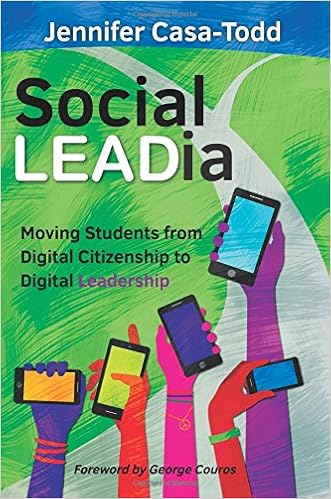
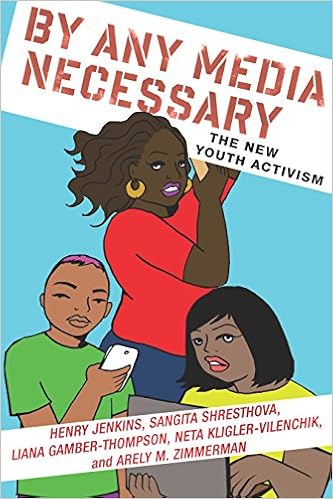
  • students could read and discuss books about student leadership, books like Social LEADia and By Any Media Necessary.
  • when students learn about a conference they can post it in the group
  • when students attend a conference they can post notes and ideas gained at the conference in the group
  • students who are struggling to gain or motivate followers for an initiative can use the group to share who they gained empathy with, the cause they are addressing, what feedback they got from stakeholders, what methods they have tried, and then get help from their peers.
  • TED Talks! Who doesn't love a good TED Talk discussion? Like Derek Sivers on how to start a movement.
  • Models of leadership: when students see leadership in action, they can capture it and post it to the think tank so leaders-in-training can dissect what makes an effective leader.

It is a start. I am excited to get started. If all goes well, the leadership think tank will take off. The teachers involved will be excited about the potential of a similar group in their classes and the initiative will grow. We'll see. I am cautiously optimistic.

Saturday, October 22, 2016

Professional Learning about Assessment and BYOD

I am preparing to facilitate two professional learning sessions for my new colleagues. Each will last 90 minutes. The first will focus on assessment in a BYOD environment. The other will focus on student discussions (small group and whole class) also with a focus on how technology can support and improve these student interactions.

Here are my non-negotiables as I develop these session plans:
  1. Pedagogy is the focus, technology plays a vital supporting role.
  2. As facilitator I will walk the walk, i.e. I will model, not just describe, the pedagogy.
  3. The instructional strategies and technology applications will have cross-disciplinary relevance and utility.
  4. Everyone will leave prepared to implement new pedagogy AND tools in their next lessons or units in ways that help students connect intellectually and experientially with the learning.
I have just about completed my outlines of each session. I still have a couple of choices to make, but need time now to let everything percolate. And it was during this time that my daughter, also a high school student, took the PSATs. The evening after she sat for that test (a phrase that speaks volumes about the testing experience) she was describing to me a growing #PSAT response being spread through social media. So I captured her on video describing what was happening. Then I paired that video with pictures of student assessments that I took while students were working around me in the library and snapshots of the social media posts. Add a little music and this is what emerged:


I am planning to use it as the ignite for my assessment session. I like it because it doesn't point fingers at any current assessment practices by my colleagues who are all incredibly dedicated, hyper-intelligent educators. It shows how students react to standardized (non-personalized) experiences. It also shows how students' networks are national or global, they default to digital modes of communication when they care about what they are discussing -- even when they have been told not to discuss it. Wow. They are responding to a standardized experience with personal insights that are shared with a global community in ways that are entirely digital. Doesn't that invite us to rethink how we assess the students in our classes?!

I'm curious if you see these ideas in my video... I still have time to improve it. Thanks!