Showing posts with label digital media. Show all posts

Thursday, May 10, 2018

What started as a proposal to present at a conference became this blog post

Print tabloid journalism was one-way information distribution. No matter how much the headlines yelled at passersby from the newsstand, they couldn’t yell back. Standing in the grocery checkout line, all you can do is scan the all-caps headlines yelling at you from the pages and passively receive their messages. To dispute the claim that Elvis fathered an alien love child, required that you purchase the journal, write a letter, stuff it in an envelope, find the address in the journal, address and stamp the letter, deliver it to a mailbox… Right. It wasn’t going to happen because it likely wasn't worth it. Digital delivery of and access to information happens at an ever accelerating pace, and we can and do respond, instantly, from anywhere, at any time. The limits of time, place, and access imposed on us by in-real-life civic participation sometimes also serve to temper our contributions to these discussions. So how do we foster productive, thoughtful, effective engagement in digital communities?

Perhaps we could debate the notion that digital citizenship (not the behaviors, but the state of being connected) is a choice. After all, being born (as I was) in the United States by default conferred citizenship status upon me. But digital citizenry required me to make a choice to join a community (actual, multiple communities) and agree to their standards of conduct. Even though I periodically self-impose a digital citizenry hiatus upon myself, I can’t imagine this as a permanent state of being. Whether we distinguish ourselves from our children, our students, or a younger generation as digital immigrants vs. digital natives, joining a digital citizenry is, to some extent and at least at some point, a choice. If we choose to be and to educate digital citizens we must hone a new and complex skill set. We must:
  • Develop graphicacy: the ability to unpack images that blend data, text, and iconography
  • Think like fact-checkers: triangulate the information we consume to verify its origin, purpose, and accuracy
  • Understand our own bias: know when our bias prevents us from critically seeing someone else’s and inclines us to confuse opinion with evidence
  • Empathize: understanding and accepting the hopes, fears, and other motivating factors in another person’s life is essential to building constructive dialogue
  • Employ emotional intelligence: recognize when an emotional response to something is suppressing our ability to speak or write with measure. 

Consider Dylan Marron starting a podcast of phone calls with the people who leave hate comments on his videos. Marron’s conversations help him and his detractors build empathy with one another. Marron invites people who posted rather hateful comments to and about him to discuss their opinions with him. He doesn't seek to convert, only to understand them. In return, they reflexively dial down their vitriol in favor of a reasonable exchange of ideas. Proving that agreeing to disagree can be an acceptable and productive outcome to dialogue.

We could make Dylan Marron's life a little easier (although that might rob him of an incredible podcast) because it is possible to teach our students to engage in effective digital dialogue. Empathy and emotional intelligence, combined with media literacy are the keys to healthy digital citizens and productive digital community interactions. Kristin Mattson writes convincingly and authoritatively about how to foster a networker's mindset and build students' effective digital communication skills through guided practice unpacking digital conversations that scaffolds to the ultimate goal: positive and productive digital agency.

A couple of months ago I was fortunate to work with a group of students at my school piloting the anti-cyberbullying curriculum designed by the Trust and Safety group at Google in partnership with media production company, Harmony Labs. The key to the effectiveness of this curriculum is that all the material is delivered via virtual reality. By immersing themselves in the scenarios they are going to discuss, actually becoming a part of the scene, students are drawn to certain characters in the video they are watching. They are likely also put off by or dislike characters. And they can be guided to watch and follow a certain character as a story unfolds seeing the action as that person sees it. Again, it's all about empathy. All of the videos are accessible on YouTube via the phones students carry in their pockets and the virtual reality experience is made possible with a Google Cardboard. I like the symmetry of using the power of media access provided by their phones to teach them to use their phones (and all they can access via them) to conduct themselves wisely.

This experience with the anti-cyberbullying curriculum reminded me of Anna Deavere Smith's TED performance: Four American Characters. When I was a history teacher I used her talk in my US History classes to show students why primary sources mattered to understanding history. "Look what she is doing," I used to say to my students, "spending so much time with a person that she can become that person. That is what primary sources do for you. If you can wrestle with them and unpack them, they return you to a place a in time to live a moment the way a real person experienced it." After I discovered this 2005 TED talk, I started building living tableaux with my students. I would present them with an iconic historical photograph and let them work in teams to pose one another in order to replicate the action of the photo. Then, they worked together to unpack the image we had reconstructed in order to understand the motivations of the people depicted. We would consider how the image we were examining was distributed, what voice the subjects of the image had in its making and distribution, and what we need to keep in mind as viewers of this snapshot of a moment in time composed by someone else with his/her/their own purpose or agenda. Finally, we compared the historical image to a very current one to illustrate the challenge in applying these skills to media that incites a visceral response and inclines viewers to unsavory, hateful, or otherwise nonconstructive posts. Or inhibits viewers from engaging in dialogue about posts that are hateful, discriminatory, or in some way offensive. (For more on this methodology, see this post.)

That's empathy.What Deavere did, what Marron does, what we must do as educators, is provide our students as many ways as we can, to develop empathy with the subjects of their studies, with the authors of the information they consume; so that they can compose their reactions (whether those reactions are research papers or social media comments and posts) from a place of insight into the motives and experiences of the original author and self-awareness about what their digital relationship with that person is and can be.

So, given that this started as a conference proposal, would you attend this workshop?

Monday, April 2, 2018

The Social Media Infused Classroom: Mediated Messages 2.0

I have written a few times about my experiences as a member of the Certified Google Innovator #SWE17 cohort and the ongoing learning as part of #GoogleEI . The focus of my application to the Innovator Academy (and the ongoing thread of my work with students and my colleagues) is the development of media literacy. The importance of media literacy can not be understated. Nor can the value of social media as a teaching, learning, and publishing tool.

In the latest iteration of my Innovator project, Mediated Messages, I have added a section on lesson ideas and launched a Facebook group for building a collaborative community dedicated to expanding our capacities for media literacy instruction. Social media is a multi-faceted education tool; it can be used for personalizing instruction, as a research resource, to foster global engagement, and to provide authentic digital citizenship practice. Here are examples of it being used or practiced in each of these contexts.

For Personalizing
In this previous blog post I wrote about my collaboration with an English teacher creating The Selfie Project. Ultimately, as a corollary to their study of Transcendentalism, the students used the makerspace to create 3D representations of self (we called it, "Yourself, in tangible relief"). The project started with an examination of all of the ways a student's identity can be explored, including through playlists, social media, school pictures, the contents of their bedrooms, and their school data. The lesson steps are here and this is a gallery of pictures of the students and their work

For Research
Understanding "Journalistic Truth" and the impact of digital media on our sources of information is essential to student development of savvy research skills. The journalistic truth slides outline a two-period lesson I co-delivered with an English teacher to the students in the non-fiction writing class.

Finding experts and research or non-profit foundations on social media is another excellent way for students to collect valuable insight and potential interview subjects to inform their inquiry.

For Global Engagement
An educator with a global PLN has the resources to connect students with adults and other students around the world for a sharing of culture and point-of-view. Exposure and interaction builds empathy and collaboration. My favorite experience using social media as a teaching tool happened when I was a social studies teacher working with a group of American Studies students. We were studying the cold war and I happened to have a Tweep who is an educator living in eastern Germany. She joined my class for a twitter chat about life in eastern Germany behind the wall and after the wall came down. We were scheduled to chat for 30 minutes and ended up chatting for the entirety of a 70 minute block period. During that time a few of her teacher colleagues joined the conversation as did her daughter who was a student at university. Now my students had both adults and a peer with whom to share perspectives. Several of my students and Ines' daughter began following each other on Instagram, too. The conversation began as a discussion of cold war life and evolved into a discussion of how do we each learn about the other. It was a rich exchange that far exceeded my expectations when Ines and I were planning it!

Teachers at my school haven't yet warmed to Twitter but they are enjoying Flipgrid in closed, classroom-based exercises. Expanding their grids to include participation outside of our school will be a first step building PLNs.

As anyone in the Google Innovator program knows, my cohort, my coach, and my mentor are unparalleled in their support of my work and the counsel they provide. And it's all happening via social media and Google Hangouts.

For Digital Citizenship Practice
I have an on-going collaboration with the teacher of our school's Digital Literacy course. Together we have launched a class Twitter account that the students use to post reflections on lessons and units and provide insights and guidance about good habits of online conduct. To launch this account we had students use Canva to design channel art. We loaded each of their submissions into a Google Form which we pushed to them in Classroom. Students then voted for their favorite design and that was uploaded to Twitter. Then I taught a brief lesson on Hashtags & the Anatomy of a Tweet. The conclusion of the lesson was each student drafting what the first class tweet should be. Again, we shared the submissions with the class and they chose which would be used as our introduction to the Twitterverse.

Social Media Think Tank for your students is another way to engage them with social media in the context of your course material; here is an elevator pitch you can use with your students.


And that's not all!
My interest in educational use of social media preceded my acceptance into the Innovator Program and new opportunities to continue my learning in this realm have emerged because of the connections I made there. Here are some of the other irons I have in the fire at the moment:

At ISTE18 I will be co-presenting on using social media in the college search and application processes. From building a brand to researching schools to writing the college essay, there are so many ways students can powerfully use social media.

Public libraries in my area are interested in hosting seminars about media savvy and I have a couple happening this month.

My book is about to be released! I co-authored News Literacy: the keys to combating fake news with my friend and fellow librarian, Michelle Luhtala. It will hit the stands in May 2018! I am very excited about the companion video workshops that are being released in conjunction with the book. Those lessons include outreach into social media communities so that the learning is ongoing.


Monday, November 27, 2017

Slow start and slight pivot


When I packed my bags in Stockholm back in early October to begin the trek home from the Google Innovator Academy (#SWE17) I was experiencing information and idea overload. I was inspired to revolutionize teacher-student relationships and conquer students' digital media illiteracy, and I set a goal for the end of the first quarter of my year-long project that I thought was modest. When I shared the goal with the cohort during one of our final sessions, Becky Evans said, "Wow. That's ambitious." Really? I thought, but didn't say.

My goal: by the end of the quarter I will have recruited at least two teachers to form think tanks in at least one of their classes. Students will be posting regularly and the teachers will have begun to introduce ideas from the think tanks into class which has encouraged student voluntary membership in the think tanks to grow organically.

That's it: two teachers, two classes. I built this Google Site to explain the concept of class-based social media think tanks and shared it with some colleagues. I met with a building administrator to explain the concept and received administrative sanction to roll-out my plan.

In a nutshell, here is what I proposed:

To create a class think tank.
  • Invite members of your class to join - everything is voluntary and nothing is graded!
  • Choose a social media platform that will work for the group's members: a closed Facebook group, Twitter, Instagram, etc.
  • As a team, create a name for yourselves.
  • Decide upon a team hashtag (#)
  • Invite think tank members to share reflections about what you are doing in class via the social media platform, using your think tank's chosen hashtag. 

In addition I provided a page with ideas for maximizing the positive classroom impact of the good work happening in the think tank and expand how the think tank could be used (scale it up!).

Well, I am now at the 6 week mark. I haven't revolutionized anything. Of the three teachers who initially expressed interest in creating social media think tanks for their classes, only one remains involved in the planning. She has backed pedaled from the idea of a class-based think tank and instead, since she is one of the co-advisers, invited me to pitch the idea to the student council. These colleagues who co-advise the student council are new to those roles this year. One of their goals, developed with the council, is to increase the leadership training and experience of council members. To support that initiative we are going to launch (actually I made the group this morning) a closed Facebook group that will serve as a leadership think tank for the council members and, when the council decides it is time to grow the group, other leaders among the student body will be invited to join.

After I introduced the idea to the students this morning, we brainstormed ways the Facebook group could be used:

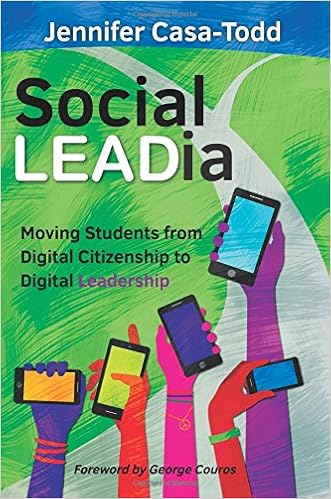
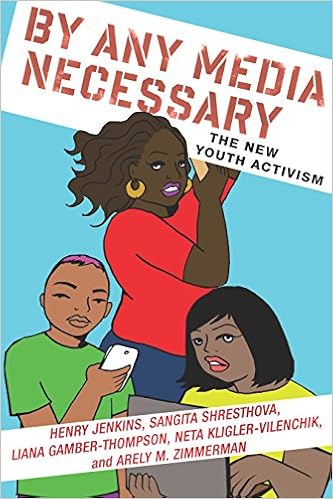
  • students could read and discuss books about student leadership, books like Social LEADia and By Any Media Necessary.
  • when students learn about a conference they can post it in the group
  • when students attend a conference they can post notes and ideas gained at the conference in the group
  • students who are struggling to gain or motivate followers for an initiative can use the group to share who they gained empathy with, the cause they are addressing, what feedback they got from stakeholders, what methods they have tried, and then get help from their peers.
  • TED Talks! Who doesn't love a good TED Talk discussion? Like Derek Sivers on how to start a movement.
  • Models of leadership: when students see leadership in action, they can capture it and post it to the think tank so leaders-in-training can dissect what makes an effective leader.

It is a start. I am excited to get started. If all goes well, the leadership think tank will take off. The teachers involved will be excited about the potential of a similar group in their classes and the initiative will grow. We'll see. I am cautiously optimistic.