Showing posts with label libary media. Show all posts

Friday, March 16, 2018

An off-Broadway lesson on personalization: the selfie project

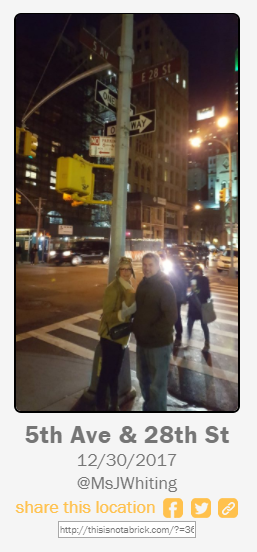
Back in December I saw “In and Of Itself,” the one-man show by Derek Delgaudio off-Broadway in New York City. I was utterly awed by this show, both the concept and the performance. Perhaps you have seen, on social media, images of Neil Patrick Harris, the show’s producer, holding a small card that proclaims “I AM an individual.” The whole show, all of the stories and the magic, evolve from and respond to the individuals in the audience. All audience members, as they enter the theater, select a card that they decide defines them. My chosen card said “I AM an innovator” because I had recently returned from the Google Innovator Academy in Stockholm, Sweden. At the end of the show, Delgaudio jokes that some people may have snarkily chosen their card seeking to be something funny, like a ninja, while others may have chosen a card that is something they aspire to be, and still others a card that proclaims who or what they are. Regardless, he reminds us, each member of the audience selected a card for personal reasons that the rest of us would never know.

You might be wondering what does this has to do with libraries or school or teaching. My answer is: Everything. If Delgaudio can personalize a 75-minute long show in response to an audience of 200 or so strangers (give or take for the smattering of celebrities who attend the shows), then we can personalize our instruction for the 25 or so students in our classes whom we see daily and know by name. Whose data we review and analyze. Who spend more waking hours of their day in shared space with us than with anyone else close to them in their lives. At the end of the day, we want them to have conversations like this:

LEE: Hi!!! It’s been awhile! How are you? I just wanted to text you to see your thoughts on Derek Delgaudio’s show! As you may remember I’m a magician, and Derek is actually a friend of mine, he was my counselor for years at camp. I’m seeing his show again next week.

ME: Get out of town! I thought the show was amazing. We talked about it all night and for days
afterwards. It still comes up periodically in conversation and certainly resonates with me with things I read as you can see from my posts on Facebook. What a privilege for you to study with him! And of course I remember you are a magician, I could never forget!

LEE: Haha I’m so happy to hear you love it, I think it was a phenomenal show magic wise and theater wise. The ending was beyond beautiful, and I think the last moment of the show is jaw dropping. It’s so cool how the show extends out of itself too, with the brick leaving the theater, and having someone come to the next show, that’s just genius

ME: Yes, on all counts! I just love that I am constantly reminded in my daily interactions from having seen that show that everybody I encounter is more and different than what I think they are upon first glance or even if I have known them for a very long time.

LEE: I love that you got that out of the show, magicians just can’t normally give an audience a good message besides “haha I fooled you”....

LEE: What “I am” card did you choose?

ME: I chose innovator. I don't know if you know, but I was accepted into the Google innovator Academy and went to Stockholm to study this past October. And then when he asked people to stand if what they chose is how they see themselves, I stayed in my seat because I decided that being a Google innovator is a label someone else has given me and I am still aspiring to deserve it…. When you see him can you tell him that an aspiring innovator who is also a high school librarian in Connecticut is still thinking about the messages of his show and will for quite some time into the future.

LEE: Of course I heard! Congratulations! And I’m rly interested in that way of thinking. Of course I’ll tell him for you! ...

This is the transcript of a Facebook messenger chat I had with a former student who saw my social media post about seeing the show. Parts of the chat have been removed to prevent show spoilers, but the spirit of the chat is in tact. I have included this chat, with Lee’s permission, because it shows a teacher-student relationship outside of the classroom and because the interaction was made possible by a social media connection. Lee and I first shared a classroom, classmates, and a curriculum. Now we safely and respectfully share a digital space.

This dialogue with Lee helped me articulate for myself the ironically simple lessons I have taken from Delgaudio’s performance and translate those lessons into teaching and librarianship. What follows is an exploration of a way I am collaborating with a teacher of AP English to apply these lessons to the students’ examination of Transcendentalism. First, the lessons (in no particular order):

Lesson 1: Be authentic. Share stories from your life so that your collaborators (students and teachers) understand your backstory. It is impossible to develop empathy otherwise.

Lesson 2: Acknowledge, then disregard, your preconceptions. We all have them and they limit how well we can understand each other.

Lesson 3: Magic inspires awe. Embrace wonderment. It leads to questioning, theorizing, teamwork, and problem solving. It may not lead to “right” answers, and it doesn’t have to.

Lesson 4: Timing is everything! Capitalize on the moment. Know where the students are and meet them there. Don’t wait for them to come to you.

My co-teacher in this exercise is a highly-regarded veteran educator. Her background in the pop culture publishing world helps her bring an edge to her curriculum application that students appreciate. We have only known each other for six months. While she has invited me to teach lessons in one of her classes, we have just begun to transition from me as guest teacher to us as co-teachers. And this is the first time she has opened her high stakes, AP class to working with me. Transcendentalism is perfect content fodder for applying the four lessons.

The students will read and unpack Emerson and Thoreau’s consideration of self. The students are discussing the musings of two men who, more than 150 years ago, dedicated themselves to understanding the nature of intellect, the connections between humans, and what it means to be self-actualized. Needless to say, this is a stretch for 17 year olds. Thoreau, at least, disconnected himself from organized society to get in touch with himself and the natural world. Disconnect is not something digital teens do often or willingly. But portrayals of self are something they do constantly. So selfies and snapchats are our authentic route by which to bring transcendental thinking to the digital teen.

With fidelity to the TPACK model of educator collaboration, the English teacher will guide the students through a viewing of Into the Wild and an application of Emerson and Thoreau to Chris McCandless. They will also be reading the article from the May 21, 2009 New York Times called “The Case for Working with Your Hands”. As colleague says, working with your hands is “a very Thoreauvian thing to do.” This means the students are coming to work in the makerspace!

We are starting with a consideration of the art of portraiture and these guiding questions:
How do artists and photographers capture the essence of a person?
Has the artist captured not the person but whom we want the person to be?
Or, do we not matter and the artist portrays the subject as the artist wants the subject to be seen?
Students will apply these questions to various portraits and self-portraits including Arnold Newman’s iconic photograph of Alfried Krupp, Annie Liebowitz photographs of Patti Smith and both a Frida Kahlo self-portrait and a still from the movie starring Selma Hayek in which the painting of that self-portrait is portrayed. Artists have been making selfies for centuries; these are the ones we selected because the content of each will likely resonate with our students (Lessons 1 and 4).

Now we will turn the students to examine different conscious and unconscious ways they are portrayed and in the interest of time, the introspection and artifact collection that must occur in preparation for the final project will be facilitated through a series of shortscreen casts, thus flipping the classroom and allowing for private reflection on the nature of self. For each type of portrayal we will both share a piece of our own story (Lesson 1). We will start with student data. Between Naviance, PowerSchool, and College Board, there is lots of data that is compiled to tell a story of each of these students -- both as individuals and as part of an aggregate. They will collate their data and decide, “If all we know about you is your data… who are you?” (Lesson 2)

Next we will turn to their playlists and ask them to consider what do their video and music preferences say about them? “If all we know about you is your playlists… who are you?” Related to their playlists is the constructed reality of their social media self-portraits. After they review what they think are their important posts on a variety of platforms, they will decide: “When you post on social media, what narrative of your life or yourself are you creating?” (Lesson 4)

Next, we will turn to the tangible. Students will inventory their bedrooms making a list of what they find there and respond to this question: “If all we know about you is the contents of this space… who lives there?” Finally, we want them to collect their school pictures, arrange them from youngest to oldest, and when they see them in sequence consider what story they tell (Lesson 1).

Have you noticed an absence of Lesson 3? Here it comes!

Now the students are ready to get Thoreauvian. It is time for them to unpack themselves. Using all the information about themselves that they have curated: their data, their playlists, their social media, the artifacts in their rooms, and their school pictures, they are going to answer these questions:

What do you:
Hope? Fear? Believe? Desire? Wonder? Deny? Aspire? Want? Plan? Anticipate? Avoid? Regret?


Each response must include evidence from their curated information and artifacts.

And now it is time to create! The class will visit the makerspace to create a selfie, a tangible representation of all that it means to be them. They can use light and sound, texture, mixed media, positive and negative space, and all the possibilities of their imagination (Lesson 3). They might compose and shoot their own photographic portrait, or create a mixed media representation of themselves, or build a sculpture, or something else we can’t anticipate. In other words, your self, in tangible relief. It will be magical and they will appreciate that there is so much more to them and each other than can possibly fit on one card.

Monday, December 19, 2016

Using Question Stems to Spark Inquiry

As I am working with students on research exercises I am working to find ways to help them with the development of their research questions. The scope of their research and the means by which they explore what they learn are all products of a well-crafted research question. I am observing that students can ask very narrow questions that begin with "what" and very broad questions that begin with "why." Without prompting, they get stuck here: too narrow or too broad. To help them expand their inquiry strategies I have begun using these question stems to push their thinking:

Which?  This stem helps you to collect information to make an informed choice. For example: Which Twentieth Century president did the most to promote civil rights?

How? When you seek to understand problems and perspectives, weigh options, and propose solutions, try starting your question with this stem. For example: How should we solve the problem of water pollution in Long Island Sound?

What if? Your question can change history! Use the knowledge you have to pose a hypothesis and consider options. For example: What if the Apollo 13 Astronauts had not survived?

Should?  A question can invite self or community examination. Using this stem, you can make a moral or practical decision based on evidence. For example: Should we clone humans?

Why? Understand and explain relationships to get to the essence of a complicated issue. For example: Why do people engage in human trafficking?

I like these stems because students can decide on the purpose of their inquiry and use the stem best suited to that end. They also are versatile and can be used in any discipline. What is really key, is they push students away from bias confirmation, from the tendency to ask questions to which they believe they already know the right answer. By using these stems and asking many questions about the same topic, they are pushed to think critically about the subject of their research and remain open to a range of evidence and perspectives before developing their thesis.

Here are examples of the stems being used all about the Civil War:

  • Which Civil War general was the best military strategist?
  • How did King Cotton affect the Confederacy’s waging of war?
  • What if General Lee had better intelligence at Gettysburg?
  • Should Confederate symbols be used in official state flags and logos today?
  • Why did Great Britain favor the South during the Civil War?

And here are literary examples focused on Shakespeare's plays:

  • Which of the characters in Henry IV has the most relevance for today’s politicians?
  • How does Hal’s ascension to the throne affect perceptions of his father’s coup?
  • What if Brutus had made the final funeral oration in Julius Caesar?
  • Should Hamlet have minded his own business?
  • Why does Shakespeare use so many references to the natural and unnatural in Macbeth?

I have used these this year with grade 11 students researching the relationship between socioeconomic class and opportunity in modern America. These stems helped the students focus their topics under the umbrella of the unit essential question.

Today I will use them with grade 10 students. Their essential question is "What should be America's response to the current refugee crisis?" Imagine the research possibilities with each of these stems: Which country has a fair, enforceable policy in this current refugee crisis? How does US response to Syrian refugees compare with US response to Holocaust / Bosnia / Vietnam refugees? What if the US reinstated quotas like those of the 1920s? Should the UN establish and monitor camps for the refugees? Why did the French respond to the Calais Jungle as they did? Using these question stems, the students can focus their research on the aspect of this issue that is most interesting to them, and the teacher can engage with the students about content that the student has chosen so the curricular experience is personalized. Ultimately the students will be writing Op-Ed pieces and they range of issues and perspectives considered will read to rich classroom discussion and mean the teacher is not reading twenty five identical papers. A win-win exercise!

Monday, November 28, 2016

Inquiry Update: Refining the Questions and Keywords

In my last post I wrote about our preparation for using the Question Formulation Technique (QFT) designed by the Right Question Institute to inspire and focus high school juniors for writing their research papers. They are writing this paper at the conclusion of reading The Great Gatsby; the unit essential question is: how does socioeconomic status affect opportunity in modern America? When I wrote my last post, we were collecting and reviewing possible artifacts to serve as a Q-focus for the classes. Ultimately, we chose to provide several and allow the students to choose which focus to use and with which students to work. Their Q-focus options were:

  • the strategic school profile for a nearby high school that is very different than our school
  • an expired green card
  • a birth certificate in both English and Spanish issued in Mexico
  • a photograph of five members of the St. Louis Rams entering the stadium with their hands up
  • a data visualization of household income gap by race
  • another data table about education levels among married black women
  • data about health care access by race adjusted for income

We used these slides to explain the QFT protocol. They were projected around the room while students worked so they could refer to the directions as their groups collaborated on each task. As students sorted and rewrote their closed and open questions, they collected their questions on a pair of slides dedicated to their group's Q-focus. Here is an example from one of the four classes that used this process. All of this was completed just before the Thanksgiving long weekend. Today we returned to school and the students in all four classes working with us on this research paper submitted the current draft of their research question for us to review. Their questions address a vast array of current sociopolitical issues. Certainly they still need refinement, but students are beginning to narrow their focus to a topic of interest that is potent in the U.S. today. Here is a selection of the (unedited) questions the students are asking:


  • How does affirmative action impact minorities? 
  • Does gender affect a persons income? Why do blacks have a lower income than whites/ does race affect a persons income?
  • How does race and wealth impact the type and level of education you can receive 
  • How does geographical setting affect health care accessibility for adults?
  • How might a persons socioeconomic status directly affect their access to quality healthcare?
  • How can racial bias in the judicial system affect the way a case is treated?
  • How does poverty impact the learning and culture of a school body as a whole in terms of absences, disciplinary actions, and Free or Reduced Lunch (FRL)?
  • How has the Affordable Care Act impacted people with lower socioeconomical [sic] status?
  • How does the justice system affect imprisonment of the lowest social classes?
  • What causes the tremendous inequality in educational oppurtunity [sic] in America?
  • Why are crime rates higher amongst the lower class?
  • How does ones socioeconomic status affect the severity of their mental health?
  • How does income inequality affect rates of incarceration for different social classes?
  • How heavily does education influence the likelyhood [sic] of achieving a stable, lucrative career?
  • How does race effect the odds of immigrants achieving well paying stable careers?
  • "How do the living conditions and locations of adolescents contribute to their level of education?"
  • How has the war on drugs affected people's ability to rise from poverty?
  • How does the constant factor of social class diversity affect the quality of education in a child's lifetime?
  • Why is the education gap in America growing? and how can we close the gap and have an equal education standard across the US?
  • Why are there a lot of college drop outs
  • How do the economic circumstances of ones birth dictate their potential, as opposed their talent and hard work?
  • How does social class affect parenting?
  • Does race affect the amount of college dropouts?
  • How do financial issues lead to high dropout rates in college?


Clearly these questions still need refinement. We are pleased that students have started to branch their thinking into aspects of American society and historical issues that they were not able to consider before we introduced the QFT to them. Our next step is to help students begin generating keywords for searching our databases and print collection for information about their topic. We believe that once they start listing terms relevant to their question, they will begin to see the possibilities for refining and focusing their questions to better fit the constraints of a five page paper.

That is tomorrow's plan. We are going to ask them to examine the entire list of collected questions from the four participating classes and copy into a document any of the questions that they think explores the topic they are trying to research. Then the students will begin compiling a list of key terms that are related to their topic and their questions. We will provide them instruction on the value of key terms including how to use them in searches:

  • Boolean Logic (and, or, not)
  • Truncation and Wildcards (*, ?)

Then we will ask the students to resume compiling their lists and then revising their questions, ultimately choosing one question to sustain their research. Stay tuned to see how this unfolds.

For those of you interested in updates on the research project using Google My Maps, we are getting ready to introduce it so more on that will be coming soon, too!

Sunday, September 25, 2016

Get Your Game On!

Last year I was very invested in exploring whether and how game-based learning can enhance student engagement and mastery. I approached this study from multiple angles:

  1. I collected and arranged times for students to play games outside of class that would compliment and enhance their content studies.
  2. I bought a subscription to ClassCraft to use with my ninth graders as a classroom management tool.
  3. I created games (and used ones that I could find) that were applicable to class content, useful in illustrating curricular principles, differentiated to student interest and ability, and executable in a single class period.
My new home in the library (media center) has me reviewing these experiences to determine how I might bring useful adaptions of game-based learning to my new colleagues and how I can create spaces for game-based learning in the library.

First, a bit more reflection on the three prongs to my exploration last year. In preparation for bringing games into the classroom I did some reading on game-based learning and how it differs from gamification. I read reviews by educators and gamers of different games that I thought might compliment my curricula and accumulated many new board games and lots of links to online games. To begin, invited fifteen or so students to stay after school on a PD early dismissal stay and play the games. I bought them pizza and watched while they self-organized and played. At the end of each game I asked them to fill out this form and give me feedback. The most enthusiastic feedback about one of the games was: "This game is different than any game I have ever played before. I think this way of learning about living life back then because you get so competitive, that you feel the stress of creating a life for yourself. I would love to play these games every week to learn! It is such a creative idea! It gives so much depth to learning with games overall because you learn how to reflect on a mistake, use your resources to your advantage, what the other players in the game can do for you or hurt you...etc. It is also really interesting to play a game that is so complex and difficult, I didn't know they made games like this!"

Some of the games were too easy, some of the games were too complicated and that is important to know and gave me insight into differentiating. I found this comment very interesting: "But for use as an educational tool, I cannot honestly advise much. From what I played, the only facet relating to government was the interaction between players in trading resources. Diplomacy is a fairly important part in the gameplay, especially when others have accrued resources you need. But there are no tariffs, no taxes, and no lengthy customs processes that need to be navigated to trade goods." Clearly, there is much to be learned from the right game -- this student needs a more sophisticated challenge. I replicated this session throughout the year making use of periods during the day for independent study and students continued to review new games as I found them.

ClassCraft gamified my ninth grade classes. I adopted it as one of many strategies for engaging and focusing a particularly rambunctious groups of students. I found it somewhat useful in that regard. Rather than assigning points certain formative experiences, I used ClassCraft competitions. I still accumulated the information I needed and students engaged in showing me what they new and could do without feeling "hyper-assessed". Again, my goal was much more about game-based learning, but this tool was helpful for behavior modification.

After a semester of working in these two modes, I felt ready to meaningfully introduce games as part of the learning experience. My classes were 1:1 Chromebook so I could incorporate online games for this. The Redistricting Game is a great one for illustrating the principles of gerrymandering and the complicating factors in creating legislative districts. There are multiple levels to the game so students can work at their pace. No matter how far a student manages to progress, there is meaningful choices they have to make and on which they can reflect to compare the game experience to historical or current events. Building on the ClassCraft experience and knowing that I had many students who were heavily involved in fantasy sports leagues, I created a Fantasy Election that we ran for the entire semester (beginning with the Iowa Caucus through the June primaries) to learn about the process by which the major parties select their candidates. Hands down, this game is one of the best things I have done as an American Government teacher. Students were tracking poll data, researching donors to and endorsers of different candidates, watching debates, and generally engaged in current events at levels that they self-reported were unprecedented and meeting outside of class to strategize. Some students reported that they would not be paying attention to this part of the election process if it weren't for the game and now they can't stop! Parents contacted me to say that the game and strategizing for draft days was the focus of dinner table conversation and that they had previously not appreciated how intellectual and savvy their child could be.

Students also made games. Some students made games to show how the legislative process works, others to illustrate the stages of the French Revolution and still others as an artifact component to a longer research process. For each of these projects I outlined specific criteria, and we had a game-playing day where the students gave feedback on the content accuracy, creativity, and playability of each of the games.

What I am wondering now: how can I get teachers to play the best of these games so they can see how the games call for students to have background content as well as require that they collaborate, strategize, and think critically? Once they play, then they can determine the best uses for the games in their classes and I can help facilitate the play. In addition, I would like to set up game stations in the Library Media Center where we can run content-related games for students to play during their free time. I think it would be really cool, in addition to a MineCraft station, if we have a station for Sid Meier's Civilization. I would love to hear from anyone with experience doing this, particularly at a high school!