Showing posts with label #GoogleEI. Show all posts

Monday, February 4, 2019

New semester and courses start with a design sprint

I am mid-way through my second year at my current school and have begun a new collaborative partnership with a colleague with whom I haven't yet had an opportunity to work. She teaches two sections of Sociology. The students in the classes are all seniors and the semester is a bit abbreviated since they will be going on internships for the last month of school. We have met a couple of times to discuss the challenges she is confronting:

  • second semester seniors can be an engagement challenge
  • contentious civic climate means some of the course topics are challenging to discuss
  • teaching the same course for the sixth semester in a row means she is challenged to keep it fresh and relevant
This partnership is going to be exciting. My colleague is my pedagogical soul mate. She thinks 10X about any curricular idea. She is a model of risk-taking in the classroom. Failure is always forward so it isn't really failure at all. Given these habits of mind, we started with a blank slate and this question:

How might we disrupt senior-itis and
ignite students' passion for working on solutions to social issues?

Where do we start when we have a blank slate?

We began with our general musings about how to personalize this study, how to help students wrap their heads around the macro and micro views of sociology. Addiction is an issue that lends itself to sociological study on a macro level and juuling at our school is a micro view. Gender is a macro topic; professional training of our teachers around issues of gender identity in the classroom is more micro. The more we talked, the more it became clear that the students are going to have autonomy over their focus for the semester and their purpose was going to be to apply their skills to solving a community problem. The question was: How?

Embracing the principles of Universal Design for Learning we considered how to remove barriers to:
  • student engagement
  • content access
  • expressions of learning
We discussed how to promote divergent and convergent thinking processes to encourage students to think of societal issues in both macro and micro ways and invite them to see connections between the different topics.

We continued brainstorming. What if we present them with an artifact (inspired by the Q-focus from the Right Question Institute's QFT protocol documented in Make Just One Change) and have them list on one side of the artifact all of the macro issues related to it, and on the other side list all the micro issues indicated by it. Then we thought about showing them these two videos for the purpose of macro-micro comparisons:

Dove's ad about beauty standards and young girls:


Greenpeace's response:

Enter Design Thinking

But here's the rub. These students don't have experience really owning their learning. They have had choice, as in make this product or that product, but they haven't had complete autonomy. Realizing that we were already flexing our design thinking muscles trying to empathize with this group of students and design an approach to the course that would meet their needs, we decided that we needed to guide them through this same process so each student could meaningfully chart his/her/their own path through the curriculum.

To figure out what this would look like, we turned to the Future Design School app which has a Design Thinking for High School Students curriculum. Everything my colleague needs to confidently facilitate her classes adopting the mindset of innovators and successfully navigate this personalized experience is included. They will identify macro societal problems, focus them to the micro school or community level, and then engage in the necessary work of empathizing with their peers and fellow community members to research, design, test and iterate the best possible solution to these shared problems.

The Design Sprint

Because we were concerned about student buy-in we thought it would help the students if they knew where this was all going, as in what does "the design process" mean soup-to-nuts? what are we in for? To that end, we decided to do a design sprint with them: the whole process in 45 minutes. Drawing on my experience at the Google Certified Innovator Academy, we decided to have one class design a chair and the other design a wallet. In each class, I was the stakeholder; the students were all designing to meet my needs. In each class I stood in the center of the room and told a story. To one class I told the story of traveling 10 years ago and being pick-pocketed and needing to replace my wallet. Now that wallet was wearing out, and my wallet needs had changed dramatically. The class began peppering me with questions about my shopping habits, about my phone, about my acceptance of or aversion to change (the state of being, not the coins -- we had to clarify), about my likes and dislikes, about how my life has changed over the last ten years. In the other class I told a tale of whoa about aging, body breakdown and injuries and the impact all that has on sitting. Again they questioned me and asked about reading and computer habits and other lifestyle habits.

After these intense Q&A sessions, the students were each given the following materials:
  • one piece of 8.5x11 scrap paper
  • one piece (roughly the same size) of aluminum foil
  • a single pipe cleaner
  • a piece of wire-edged ribbon about six inches long
They were given five minutes to build the perfect wallet or chair to suit my needs. At the end of five minutes each student paired with a student across the room. They were each given 30 seconds to pitch their design to their partner. At the end of a minute, they chose which of their two designs was best, set the other aside and became a team pitching the winning chair to another newly-formed team. We continued the process of pitch, choose, set aside, merge and re-pitch until they were down to two designs. They then pitched to me. I critiqued each design and then chose the one that best met my needs.

Reflection on the Sprint

My colleague and I then guided a reflective discussion about the process. The students acknowledged some important elements of the design process.

Empathy: they all realized that they were intently focused on me the whole time. When they pitched it was about being best at meeting my needs. They never judged me or disregarded something I said and they never presumed to know me better than I know myself and my needs.

Collaboration: each time they re-grouped their pitch improved when new voices helped explain the product. And when I was critiquing prototypes at the end, they realized that most of the features I wanted were in some design somewhere in the room. If they worked together they could have combined those features into the best possible design.

Iteration: without either of us saying anything, both classes said they could make a new design where they could combine their best ideas into one chair (or wallet), maybe use better materials and test it again. And they also realized that talking to me with a prototype in their hand elicited important insight into my needs and how to satisfy them. They wanted more information. They were designing with me.

Going Forward

We are excited about the next steps: helping students identify a societal issue that authentically concerns and engages them and begin the process of defining that problem and finding the stakeholders who experience it. Design thinking as pedagogy is the most empowering approach I have experienced in 26 years teaching.


Monday, April 2, 2018

The Social Media Infused Classroom: Mediated Messages 2.0

I have written a few times about my experiences as a member of the Certified Google Innovator #SWE17 cohort and the ongoing learning as part of #GoogleEI . The focus of my application to the Innovator Academy (and the ongoing thread of my work with students and my colleagues) is the development of media literacy. The importance of media literacy can not be understated. Nor can the value of social media as a teaching, learning, and publishing tool.

In the latest iteration of my Innovator project, Mediated Messages, I have added a section on lesson ideas and launched a Facebook group for building a collaborative community dedicated to expanding our capacities for media literacy instruction. Social media is a multi-faceted education tool; it can be used for personalizing instruction, as a research resource, to foster global engagement, and to provide authentic digital citizenship practice. Here are examples of it being used or practiced in each of these contexts.

For Personalizing
In this previous blog post I wrote about my collaboration with an English teacher creating The Selfie Project. Ultimately, as a corollary to their study of Transcendentalism, the students used the makerspace to create 3D representations of self (we called it, "Yourself, in tangible relief"). The project started with an examination of all of the ways a student's identity can be explored, including through playlists, social media, school pictures, the contents of their bedrooms, and their school data. The lesson steps are here and this is a gallery of pictures of the students and their work

For Research
Understanding "Journalistic Truth" and the impact of digital media on our sources of information is essential to student development of savvy research skills. The journalistic truth slides outline a two-period lesson I co-delivered with an English teacher to the students in the non-fiction writing class.

Finding experts and research or non-profit foundations on social media is another excellent way for students to collect valuable insight and potential interview subjects to inform their inquiry.

For Global Engagement
An educator with a global PLN has the resources to connect students with adults and other students around the world for a sharing of culture and point-of-view. Exposure and interaction builds empathy and collaboration. My favorite experience using social media as a teaching tool happened when I was a social studies teacher working with a group of American Studies students. We were studying the cold war and I happened to have a Tweep who is an educator living in eastern Germany. She joined my class for a twitter chat about life in eastern Germany behind the wall and after the wall came down. We were scheduled to chat for 30 minutes and ended up chatting for the entirety of a 70 minute block period. During that time a few of her teacher colleagues joined the conversation as did her daughter who was a student at university. Now my students had both adults and a peer with whom to share perspectives. Several of my students and Ines' daughter began following each other on Instagram, too. The conversation began as a discussion of cold war life and evolved into a discussion of how do we each learn about the other. It was a rich exchange that far exceeded my expectations when Ines and I were planning it!

Teachers at my school haven't yet warmed to Twitter but they are enjoying Flipgrid in closed, classroom-based exercises. Expanding their grids to include participation outside of our school will be a first step building PLNs.

As anyone in the Google Innovator program knows, my cohort, my coach, and my mentor are unparalleled in their support of my work and the counsel they provide. And it's all happening via social media and Google Hangouts.

For Digital Citizenship Practice
I have an on-going collaboration with the teacher of our school's Digital Literacy course. Together we have launched a class Twitter account that the students use to post reflections on lessons and units and provide insights and guidance about good habits of online conduct. To launch this account we had students use Canva to design channel art. We loaded each of their submissions into a Google Form which we pushed to them in Classroom. Students then voted for their favorite design and that was uploaded to Twitter. Then I taught a brief lesson on Hashtags & the Anatomy of a Tweet. The conclusion of the lesson was each student drafting what the first class tweet should be. Again, we shared the submissions with the class and they chose which would be used as our introduction to the Twitterverse.

Social Media Think Tank for your students is another way to engage them with social media in the context of your course material; here is an elevator pitch you can use with your students.


And that's not all!
My interest in educational use of social media preceded my acceptance into the Innovator Program and new opportunities to continue my learning in this realm have emerged because of the connections I made there. Here are some of the other irons I have in the fire at the moment:

At ISTE18 I will be co-presenting on using social media in the college search and application processes. From building a brand to researching schools to writing the college essay, there are so many ways students can powerfully use social media.

Public libraries in my area are interested in hosting seminars about media savvy and I have a couple happening this month.

My book is about to be released! I co-authored News Literacy: the keys to combating fake news with my friend and fellow librarian, Michelle Luhtala. It will hit the stands in May 2018! I am very excited about the companion video workshops that are being released in conjunction with the book. Those lessons include outreach into social media communities so that the learning is ongoing.


Friday, March 16, 2018

An off-Broadway lesson on personalization: the selfie project

Back in December I saw “In and Of Itself,” the one-man show by Derek Delgaudio off-Broadway in New York City. I was utterly awed by this show, both the concept and the performance. Perhaps you have seen, on social media, images of Neil Patrick Harris, the show’s producer, holding a small card that proclaims “I AM an individual.” The whole show, all of the stories and the magic, evolve from and respond to the individuals in the audience. All audience members, as they enter the theater, select a card that they decide defines them. My chosen card said “I AM an innovator” because I had recently returned from the Google Innovator Academy in Stockholm, Sweden. At the end of the show, Delgaudio jokes that some people may have snarkily chosen their card seeking to be something funny, like a ninja, while others may have chosen a card that is something they aspire to be, and still others a card that proclaims who or what they are. Regardless, he reminds us, each member of the audience selected a card for personal reasons that the rest of us would never know.

You might be wondering what does this has to do with libraries or school or teaching. My answer is: Everything. If Delgaudio can personalize a 75-minute long show in response to an audience of 200 or so strangers (give or take for the smattering of celebrities who attend the shows), then we can personalize our instruction for the 25 or so students in our classes whom we see daily and know by name. Whose data we review and analyze. Who spend more waking hours of their day in shared space with us than with anyone else close to them in their lives. At the end of the day, we want them to have conversations like this:

LEE: Hi!!! It’s been awhile! How are you? I just wanted to text you to see your thoughts on Derek Delgaudio’s show! As you may remember I’m a magician, and Derek is actually a friend of mine, he was my counselor for years at camp. I’m seeing his show again next week.

ME: Get out of town! I thought the show was amazing. We talked about it all night and for days
afterwards. It still comes up periodically in conversation and certainly resonates with me with things I read as you can see from my posts on Facebook. What a privilege for you to study with him! And of course I remember you are a magician, I could never forget!

LEE: Haha I’m so happy to hear you love it, I think it was a phenomenal show magic wise and theater wise. The ending was beyond beautiful, and I think the last moment of the show is jaw dropping. It’s so cool how the show extends out of itself too, with the brick leaving the theater, and having someone come to the next show, that’s just genius

ME: Yes, on all counts! I just love that I am constantly reminded in my daily interactions from having seen that show that everybody I encounter is more and different than what I think they are upon first glance or even if I have known them for a very long time.

LEE: I love that you got that out of the show, magicians just can’t normally give an audience a good message besides “haha I fooled you”....

LEE: What “I am” card did you choose?

ME: I chose innovator. I don't know if you know, but I was accepted into the Google innovator Academy and went to Stockholm to study this past October. And then when he asked people to stand if what they chose is how they see themselves, I stayed in my seat because I decided that being a Google innovator is a label someone else has given me and I am still aspiring to deserve it…. When you see him can you tell him that an aspiring innovator who is also a high school librarian in Connecticut is still thinking about the messages of his show and will for quite some time into the future.

LEE: Of course I heard! Congratulations! And I’m rly interested in that way of thinking. Of course I’ll tell him for you! ...

This is the transcript of a Facebook messenger chat I had with a former student who saw my social media post about seeing the show. Parts of the chat have been removed to prevent show spoilers, but the spirit of the chat is in tact. I have included this chat, with Lee’s permission, because it shows a teacher-student relationship outside of the classroom and because the interaction was made possible by a social media connection. Lee and I first shared a classroom, classmates, and a curriculum. Now we safely and respectfully share a digital space.

This dialogue with Lee helped me articulate for myself the ironically simple lessons I have taken from Delgaudio’s performance and translate those lessons into teaching and librarianship. What follows is an exploration of a way I am collaborating with a teacher of AP English to apply these lessons to the students’ examination of Transcendentalism. First, the lessons (in no particular order):

Lesson 1: Be authentic. Share stories from your life so that your collaborators (students and teachers) understand your backstory. It is impossible to develop empathy otherwise.

Lesson 2: Acknowledge, then disregard, your preconceptions. We all have them and they limit how well we can understand each other.

Lesson 3: Magic inspires awe. Embrace wonderment. It leads to questioning, theorizing, teamwork, and problem solving. It may not lead to “right” answers, and it doesn’t have to.

Lesson 4: Timing is everything! Capitalize on the moment. Know where the students are and meet them there. Don’t wait for them to come to you.

My co-teacher in this exercise is a highly-regarded veteran educator. Her background in the pop culture publishing world helps her bring an edge to her curriculum application that students appreciate. We have only known each other for six months. While she has invited me to teach lessons in one of her classes, we have just begun to transition from me as guest teacher to us as co-teachers. And this is the first time she has opened her high stakes, AP class to working with me. Transcendentalism is perfect content fodder for applying the four lessons.

The students will read and unpack Emerson and Thoreau’s consideration of self. The students are discussing the musings of two men who, more than 150 years ago, dedicated themselves to understanding the nature of intellect, the connections between humans, and what it means to be self-actualized. Needless to say, this is a stretch for 17 year olds. Thoreau, at least, disconnected himself from organized society to get in touch with himself and the natural world. Disconnect is not something digital teens do often or willingly. But portrayals of self are something they do constantly. So selfies and snapchats are our authentic route by which to bring transcendental thinking to the digital teen.

With fidelity to the TPACK model of educator collaboration, the English teacher will guide the students through a viewing of Into the Wild and an application of Emerson and Thoreau to Chris McCandless. They will also be reading the article from the May 21, 2009 New York Times called “The Case for Working with Your Hands”. As colleague says, working with your hands is “a very Thoreauvian thing to do.” This means the students are coming to work in the makerspace!

We are starting with a consideration of the art of portraiture and these guiding questions:
How do artists and photographers capture the essence of a person?
Has the artist captured not the person but whom we want the person to be?
Or, do we not matter and the artist portrays the subject as the artist wants the subject to be seen?
Students will apply these questions to various portraits and self-portraits including Arnold Newman’s iconic photograph of Alfried Krupp, Annie Liebowitz photographs of Patti Smith and both a Frida Kahlo self-portrait and a still from the movie starring Selma Hayek in which the painting of that self-portrait is portrayed. Artists have been making selfies for centuries; these are the ones we selected because the content of each will likely resonate with our students (Lessons 1 and 4).

Now we will turn the students to examine different conscious and unconscious ways they are portrayed and in the interest of time, the introspection and artifact collection that must occur in preparation for the final project will be facilitated through a series of shortscreen casts, thus flipping the classroom and allowing for private reflection on the nature of self. For each type of portrayal we will both share a piece of our own story (Lesson 1). We will start with student data. Between Naviance, PowerSchool, and College Board, there is lots of data that is compiled to tell a story of each of these students -- both as individuals and as part of an aggregate. They will collate their data and decide, “If all we know about you is your data… who are you?” (Lesson 2)

Next we will turn to their playlists and ask them to consider what do their video and music preferences say about them? “If all we know about you is your playlists… who are you?” Related to their playlists is the constructed reality of their social media self-portraits. After they review what they think are their important posts on a variety of platforms, they will decide: “When you post on social media, what narrative of your life or yourself are you creating?” (Lesson 4)

Next, we will turn to the tangible. Students will inventory their bedrooms making a list of what they find there and respond to this question: “If all we know about you is the contents of this space… who lives there?” Finally, we want them to collect their school pictures, arrange them from youngest to oldest, and when they see them in sequence consider what story they tell (Lesson 1).

Have you noticed an absence of Lesson 3? Here it comes!

Now the students are ready to get Thoreauvian. It is time for them to unpack themselves. Using all the information about themselves that they have curated: their data, their playlists, their social media, the artifacts in their rooms, and their school pictures, they are going to answer these questions:

What do you:
Hope? Fear? Believe? Desire? Wonder? Deny? Aspire? Want? Plan? Anticipate? Avoid? Regret?


Each response must include evidence from their curated information and artifacts.

And now it is time to create! The class will visit the makerspace to create a selfie, a tangible representation of all that it means to be them. They can use light and sound, texture, mixed media, positive and negative space, and all the possibilities of their imagination (Lesson 3). They might compose and shoot their own photographic portrait, or create a mixed media representation of themselves, or build a sculpture, or something else we can’t anticipate. In other words, your self, in tangible relief. It will be magical and they will appreciate that there is so much more to them and each other than can possibly fit on one card.

Sunday, February 11, 2018

Media Literacy, Emotional Intelligence, and a Slumber Party

At the Google Innovator Academy we were presented with a rocket ship metaphor: as the academy was ending we each had a rocket ship on a launch pad. How would we fuel it? When might it take off? Into what uncharted areas would we navigate and explore? For a little while now, I have been feeling as though my rocket ship is fueled up and ready for ignition but ground control is waiting on favorable weather conditions to authorize a launch. And the weather has been inclement for way too long. Houston, we have a problem.

To address the problem I have had irons in many fires lately. Or, perhaps a better (still fire-related) metaphor is that I have been striking lots of matches to see which burst into flame.
  • I offered an "Appy Hour" at my school for teachers to learn about my Innovator project and join if they were interested. One colleague met with me and invited me to pitch my "social media think tanks" to his Humanities class: 55 ninth graders. 
  • My town library is preparing a series of adult seminars on media literacy and a colleague referred them to me as a presenter. I have been working with one of the other participants to prepare a workshop for this event.
  • As a result of that public library's interest in the topic of media literacy with adults as the audience, I have contacted other are libraries and will be meeting more adult programming coordinators in discuss workshops for the adults raising digitally engaged teens. The focus will be on media literacy and digital citizenship.
  • And the book is heading to print! With my friend and former colleague, Michelle Luhtala (@mluhtala) I wrote a book on media literacy full of lessons and strategies for library media specialists and classroom teachers to use with their students.
Despite these cool opportunities, I am still feeling less effective than I want to be. Media literacy is such an important skill but so little direct attention is paid to it. Content is still King and the content is still being delivered in traditional text forms and digital media (not too mention social media) in the classroom is rare. As schools undertake 1:1 and BYOD initiatives, there are movements in my area to ban cell phones in schools. So I am left looking for small pockets of opportunity and my rocketship feels like it is turning into a package of mentos and a diet coke bottle.

Once again, I am returning to the powerful "How might we..." question stem that Les McBeth (@lesmcbeth) of the Future Design School, used in our design thinking work at the Google Academy. How might we:
  • amp up the good? (One teacher is letting me pitch my idea to his class!)
  • remove the bad? (Create an optional non-tech school within the school)
  • explore the opposite? (Teaching media literacy to adults as well as teens.)
  • question an assumption? (Let's teach class virtually through social media!)
  • go after adjectives? (Online spaces can be safe and educational.)
  • find unexpected resources? (Public libraries!)
  • play against the challenge? (Encourage more teachers to engage in social media for learning)
  • create an analogy from need or context? (Make school spaces and interaction like social media)
  • change the status quo? (Make digital media reliable information for learning and being informed)
  • break point of view into pieces? (Address teachers by discipline or by grade level)
And all of this got me thinking about emotional intelligence. If that seems like a stretch, stick with me. Back in December, I attended at Digital Citizenship conference hosted by Connor Regan (@ConnorRegan), a program manager for Google for Education and Be Internet Awesome, where one of the presenters, Kerry Gallagher (@KerryHawk02) from ConnectSafely spoke about the connection between Emotional Intelligence and media literacy when it comes to recognizing and unpacking sensational material and good habits of digital citizenship. Her message resonated with me because increasing mindfulness was an underlying principle of the digital citizenship lessons we created for our ninth graders this year.

How can increased emotional intelligence help us (adults) understand how we respond to student cell phone use? And understand why students are using their phones with the frequency or in the manner that they are? How can learning about emotional intelligence help students understand their digital interactions better? AND, how can increased emotional intelligence help all of us navigate digital media?

To begin finding answers to these questions I am attending the RULER parent training offered by Marc Brackett (@marcbrackett) and his team at Yale Center for Emotional Intelligence. This morning I took advantage of having a gaggle of high school seniors hanging at my house after a slumber party to have an informal conversation with them about social media, school, and friends. What they said about Facebook didn't surprise me, and they were nuanced and insightful in their explanations. What they said about SnapChat did surprise me as did the fact that some of them are on Twitter.

Here are some of the highlights regarding Facebook:
  • "I didn't join Facebook until I had to set it up for school."
  • "You can't do anything at school without Facebook. Sports are there, clubs, and everything. We set up groups for our classes and that is really helpful. We can ask each other questions about assignments and deadlines or just vent about the class."
  • "Facebook isn't obsolete because it has a purpose like business. There's no room to be creative. If you post pictures they just get lost in the stream."
  • "Who has 60 friends? I don't."
  • "Parent presence is there."
  • "My nana likes everything that is posted that I’m tagged in."

And about SnapChat:
  • "I hate streaks."
  • "I never have streaks."
  • "Streaks feel like a chore."
  • "Sending a Snap is more personal than a text."
  • "I use it to actually talk to someone one."
Then I explained that I don't think most teens are addicted to their phones. Rather, I think most teens have an emotional need to be connected to their friends and from the outside that looks like an obsession with their device when in reality the device is the means of friend connection. In response to that they said:
  • "People who are always on their phones, it's the whole FOMO thing."
  • "That’s what I don’t like about it. I don’t want to know if I wasn’t invited somewhere."
  • "People will post just so that people know they are doing something."
  • "They just want certain people to know what they are up to."
Admittedly there was nothing scientific about my collection of these perceptions and insights. And I'm not sure yet how I will proceed with this information, but I think there is a lot of room for a Google Innovator in the social media and emotional intelligence spaces.

Monday, November 27, 2017

Slow start and slight pivot


When I packed my bags in Stockholm back in early October to begin the trek home from the Google Innovator Academy (#SWE17) I was experiencing information and idea overload. I was inspired to revolutionize teacher-student relationships and conquer students' digital media illiteracy, and I set a goal for the end of the first quarter of my year-long project that I thought was modest. When I shared the goal with the cohort during one of our final sessions, Becky Evans said, "Wow. That's ambitious." Really? I thought, but didn't say.

My goal: by the end of the quarter I will have recruited at least two teachers to form think tanks in at least one of their classes. Students will be posting regularly and the teachers will have begun to introduce ideas from the think tanks into class which has encouraged student voluntary membership in the think tanks to grow organically.

That's it: two teachers, two classes. I built this Google Site to explain the concept of class-based social media think tanks and shared it with some colleagues. I met with a building administrator to explain the concept and received administrative sanction to roll-out my plan.

In a nutshell, here is what I proposed:

To create a class think tank.
  • Invite members of your class to join - everything is voluntary and nothing is graded!
  • Choose a social media platform that will work for the group's members: a closed Facebook group, Twitter, Instagram, etc.
  • As a team, create a name for yourselves.
  • Decide upon a team hashtag (#)
  • Invite think tank members to share reflections about what you are doing in class via the social media platform, using your think tank's chosen hashtag. 

In addition I provided a page with ideas for maximizing the positive classroom impact of the good work happening in the think tank and expand how the think tank could be used (scale it up!).

Well, I am now at the 6 week mark. I haven't revolutionized anything. Of the three teachers who initially expressed interest in creating social media think tanks for their classes, only one remains involved in the planning. She has backed pedaled from the idea of a class-based think tank and instead, since she is one of the co-advisers, invited me to pitch the idea to the student council. These colleagues who co-advise the student council are new to those roles this year. One of their goals, developed with the council, is to increase the leadership training and experience of council members. To support that initiative we are going to launch (actually I made the group this morning) a closed Facebook group that will serve as a leadership think tank for the council members and, when the council decides it is time to grow the group, other leaders among the student body will be invited to join.

After I introduced the idea to the students this morning, we brainstormed ways the Facebook group could be used:

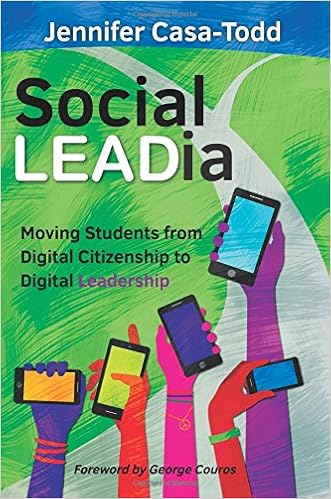
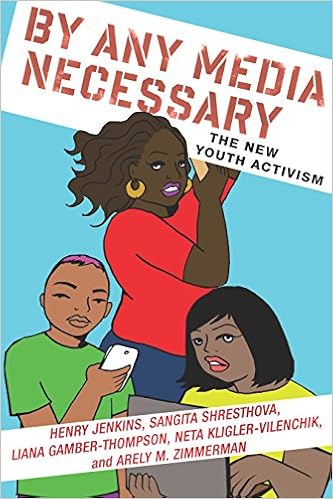
  • students could read and discuss books about student leadership, books like Social LEADia and By Any Media Necessary.
  • when students learn about a conference they can post it in the group
  • when students attend a conference they can post notes and ideas gained at the conference in the group
  • students who are struggling to gain or motivate followers for an initiative can use the group to share who they gained empathy with, the cause they are addressing, what feedback they got from stakeholders, what methods they have tried, and then get help from their peers.
  • TED Talks! Who doesn't love a good TED Talk discussion? Like Derek Sivers on how to start a movement.
  • Models of leadership: when students see leadership in action, they can capture it and post it to the think tank so leaders-in-training can dissect what makes an effective leader.

It is a start. I am excited to get started. If all goes well, the leadership think tank will take off. The teachers involved will be excited about the potential of a similar group in their classes and the initiative will grow. We'll see. I am cautiously optimistic.

Monday, October 16, 2017

To teach digital citizenship & literacy, we must be digital neighbors

I was fortunate to be accepted into the Stockholm cohort (#SWE17) of the Google Innovator Academy (#GoogleEI). The focus of my work for my Innovator project is students' digital media literacy (or lack thereof). Based on the SHEG report, Evaluating Information: The Cornerstone of Civic Online Reasoning, and other reading I have been doing about this topic, I initially thought the focus of my work would be on developing students' capacities for unpacking, critically examining, and making meaning of the myriad of digital texts that flood their social media feeds. Following the protocols the Innovator team outlined for us in advance of attending the Academy, I quickly realized that I had a different -- but related -- issue to tackle before addressing student digital literacy. That is, the lack of social media, and thus digital media not curated by a teacher, that is used or experienced in the classroom. Until teachers embrace social media as a teaching, learning, and communication tool, students will not have an opportunity to be guided in the development of their digital literacy. Thus my project: social media think tanks for any classroom. You can learn more about it at my site: Mediated Messages.

Here is my 90 second elevator pitch:


For many years I have sat through faculty meetings where district lawyers have warned us about our social media presence and connections with students. I suspect that the concerns that inspire those cautionary meetings and the policy that as educators we may not be social media friends with our students will result in push back against my project. Yet, I think it is possible for it to work. In fact, if we really mean we want to teach students positive habits of digital citizenship, then it is essential that we interact with them in digital communities.

My daughter is a field hockey player. Her team, like most other teams of which I am aware, self-organizes in a closed Facebook group. All current team members are invited as are the coaches and parents of current players. Announcements are made in this forum, pictures of games and spirit days are shared here, encouraging messages about upcoming games are offered. I am an active contributor to this group even though I am not Facebook friends with most of the group members.

I am also a member of professional Facebook groups like ALA Think Tank and Future Ready Librarians. Again, I contribute to the discussions that happen in these groups. I learn from the postings made by group members and I am not "friends" with most of the people in that group. The posts I make to my page, that are shared with my friends, are not part of that forum. In that way, I can keep my personal and professional postings and communities separate.

Twitter is another social media platform on which I am rather active. I follow many people and many of them follow me as well. There are many people with whom I engage in discourse via hashtags but we do not follow each other. My habit when it comes to Twitter is only to follow people's professional feeds. I do not use Twitter for personal posting. And, by following a hashtag, I can learn from people who contribute to that hashtag discussion without following their entire feed.

As I see it, the use of closed Facebook groups and hashtags allows teachers and students to interact on social media and still maintain a separation of their personal lives. Further separation can be achieved by the creation of classroom accounts. How ever teachers and administrators choose to structure conversations -- many athletic coaches have already figured it out -- we aren't really teaching digital citizenship or information literacy if we aren't digital neighbors.